
Best EQMS Software in 2026: Top QMS Software for Quality-Driven Businesses
Quality management is no longer a regular function it is a strategic responsibility. As compliance expectations increases and customer audits become more demanding. Businesses are actively investing in structured digital systems to maintain control. Manual tracking methods and disconnected spreadsheets are increasingly unable to support a modern operational complexity.
This shift accelerates a demand for reliable eqms software that can be a centralise documentation automate workflows and provide real time performance. An electronic quality management system not only strengthens compliance but also improves accountability and scalability across departments with multiple qms software platforms available in the market for selecting the right solution requires a very careful evaluation.
Top 10 EQMS Software for Quality management system
As businesses accelerate digital transformation selecting the right eqms software is critical for maintaining structured compliance, operational control and scalable growth. Below are 10 recognised platforms that support quality driven organisations across industries.
- Best For: Organisations seeking scalable, structured and measurable quality governance.
- Core Strengths: Integrated KPI management, workflow automation and audit-ready dashboards.
- Ideal Business Size: Growing, mid-sized SME’s & MSME’s and large enterprise.
- Standout Feature: Simple and Easy to Understand Flow, Realtime Notification, Scalability, Cost Effective, Powerful Dashboard, Customization.
Pyraman is a powerful and structured electronic quality management system designed to bring measurable control into your regular operations. Pyraman is developed by an esteemed management system consultant 4C Consulting Private Limited, this provides them an edge as they understand the management system more accurately. Pyraman integrates Document Management, Record Management, NC Management, Objective Monitoring, Audit’s and real time KPI dashboards within a single digital environment.
Unlike systems that treat quality modules as separate tools, Pyraman ensures traceability across the whole management system. Its workflow is simple and users can be easily onboarded; the system is easy to configure and modify as per the organizations need. Designed for long-term scalability, Pyraman provides the operational stability and compliance confidence modern businesses expect from advanced qms software platforms. Pyraman also provides a 24 hours support for any implementation queries and bug fixes.
Book Your Personalized Pyraman eQMS Demo
2. MasterControl:
- Best For: Highly regulated industries such as life sciences and pharmaceuticals.
- Core Strengths: Regulatory alignment, validation-ready modules and structured compliance management.
- Ideal Business Size: Mid-sized to large enterprises.
- Standout Feature: Strong support for global regulatory frameworks.
Master Control is a well-established qms software platform known for its depth in regulated environments. It provides structured document control, training management and quality event tracking designed to meet strict compliance standards. Its framework-driven architecture supports organisations operating under FDA, ISO and other regulatory requirements. Businesses seeking a mature, compliance-oriented electronic quality management system often consider Master Control for its industry credibility and structured governance model.
3. ETQ Reliance:
- Best For: Manufacturing and industrial organisations.
- Core Strengths: Configurable workflows and modular architecture.
- Ideal Business Size: Mid-sized to large enterprises.
- Standout Feature: Flexible application design.
ETQ Reliance offers a configurable electronic quality management system that allows organisations to design workflows based on operational requirements. Its modular structure enables businesses to deploy quality processes across multiple functions, including compliance, risk and supplier management. The platform supports digital transformation initiatives by replacing manual quality controls with integrated governance processes.
4.Veeva Quality:
- Best For: Pharmaceutical and biotech companies
- Core Strengths: Cloud-native compliance ecosystem and structured documentation workflows.
- Ideal Business Size: Mid to enterprise level.
- Standout Feature: Strong integration across regulated life sciences processes.
Veeva Quality is a cloud-based eqms software platform widely adopted in life sciences sectors. It integrates document control, training and quality event management within a validated cloud infrastructure. Its structured compliance framework makes it suitable for organisations operating in tightly regulated markets.
5. Arena QMS:
- Best For: Product-driven and engineering-focused companies.
- Core Strengths: Product lifecycle and quality integration.
- Ideal Business Size: Growing product organisations.
- Standout Feature: Design-to-quality traceability.
Arena combines product lifecycle management with structured quality workflows. It supports collaboration between engineering and quality teams, ensuring that product development and compliance remain aligned. Businesses focused on innovation often benefit from its integrated quality tracking capabilities.
6. Qualio:
- Best For: Scaling regulated startups and growth-stage companies.
- Core Strengths: User-friendly interface and streamlined compliance workflows.
- Ideal Business Size: Small to mid-sized organisations.
- Standout Feature: Rapid deployment capability.
Qualio provides a digital qms software environment designed for growing companies transitioning from manual systems. Its simplified structure enables organisations to centralise documentation, training and quality events within a manageable digital framework.
7. Greenlight Guru:
- Best For: Medical device manufacturers.
- Core Strengths: Industry-specific regulatory workflows.
- Ideal Business Size: Small to mid-sized medtech firms.
- Standout Feature: Pre-configured medical device compliance structure.
Greenlight Guru is tailored for medical device companies seeking structured digital compliance. The platform focuses on regulatory documentation, risk management and quality event tracking aligned with medical device standards.
8. AssurX:
- Best For: Organisations with multi-process quality requirements.
- Core Strengths: Enterprise-wide governance integration.
- Ideal Business Size: Mid-sized to large enterprises.
- Standout Feature: Cross-functional quality management support.
AssurX offers configurable quality workflows that integrate compliance across departments. It supports risk management, audit tracking and structured document governance within a unified digital system.
9. SAP Quality Management:
- Best For: SAP ecosystem enterprises.
- Core Strengths: Native ERP integration and operational alignment.
- Ideal Business Size: Large enterprises.
- Standout Feature: Seamless integration with SAP ERP modules.
SAP Quality Management integrates directly within the SAP ERP environment, allowing organisations to align quality processes with procurement, production and supply chain systems. It supports enterprise-level governance within SAP-driven operations.
10. Intelex QMS:
- Best For: Organisations managing quality and environmental compliance.
- Core Strengths: Integrated EHS and quality oversight.
- Ideal Business Size: Mid to large enterprises.
- Standout Feature: Multi-compliance digital dashboards.
Intelex combines quality management with environmental, health and safety governance. Its cloud-based system supports structured compliance tracking and operational oversight across multiple regulatory domains.
How to Choose the Right QMS Software
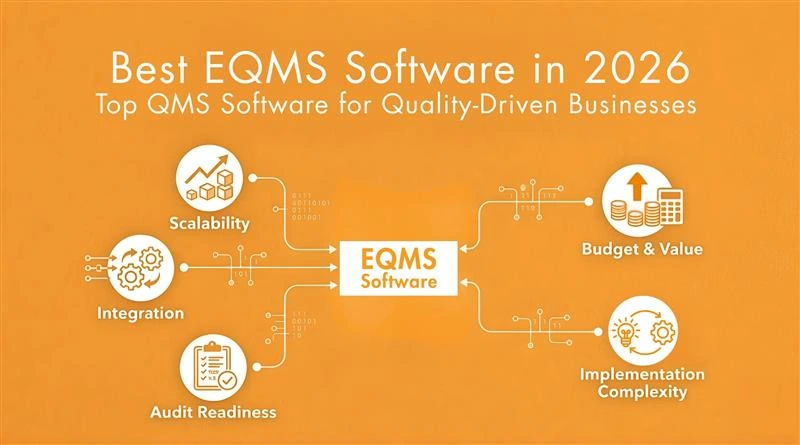
Selecting the right qms software is a structural decision. It directly affects how consistently your organisation can monitor compliance, control documentation and manage performance over time. A system may appear feature-rich, but the real question is whether it strengthens measurable governance inside daily operations. Below are the critical factors that determine long-term success:
-
Scalability
A QMS platform must sustain control as operational volume increases. As more users are added, more non-conformances are recorded, more audits are conducted and more KPIs are tracked, the system should remain stable and structured. If performance tracking becomes slower or harder to monitor as data grows, governance weakens. True scalability means the system maintains clarity and traceability even under expansion.
-
Integration
Quality processes rarely operate in isolation. Inspection records, production data, supplier information and audit results often originate from different systems. If the electronic quality management system cannot integrate or align with existing infrastructure, manual coordination continues. Strong integration reduces duplication, prevents inconsistencies and ensures that performance data remains reliable across departments.
-
Audit Readiness
Many organisations prepare for audits reactively, consolidating data just before review cycles. A strong eqms software embeds traceability into daily workflows. Version control, corrective action linkage, approval records and performance dashboards should be continuously accessible. Audit readiness should be a system condition, not a temporary effort.
-
Budget
Budget evaluation should consider more than software licensing. Administrative hours spent on manual tracking, repeated data consolidation and audit preparation carry hidden operational costs. A well-structured system reduces reporting effort, improves efficiency and prevents compliance disruptions. Long-term governance value often outweighs short-term cost differences.
-
Implementation Complexity
Even a technically strong system can fail if implementation creates disruption. The right QMS software should allow structured deployment with defined ownership, clear configuration and manageable transition phases. Systems that are overly complex can reduce user adoption and weaken control. The right electronic quality management system should improve consistency, preserve traceability and strengthen measurable oversight not simply replace paper with digital forms.
Why Choose Pyraman for Your Quality Management
Choosing the right quality platform isn’t about logos or feature checklists it’s about whether a system can genuinely strengthen measurable control, sustain compliance and simplify governance as your organisation grows. Pyraman is designed around how quality actually gets managed: through structured workflows, traceable performance and system driven accountability.
Pyraman provides a unified electronic quality management system that aligns every quality activity within a controlled digital workflow. Instead of separate modules that operate in silos, Pyraman connects quality objectives, corrective action tracking, audit evidence, KPI dashboards and document governance within one structured environment. This integration eliminates fragmentation and ensures that quality commitments remain measurable and continuously governed.
Real-time visibility is at the core of Pyraman’s value. With configurable dashboards and standardised KPI logic, organisations gain ongoing insight into performance against targets rather than waiting for periodic reports. Deviations are visible early, corrective action workflows are traceable, and audit readiness becomes a continuous system condition instead of a periodic scramble.
Pyraman’s approach to adoption is practical. Deployment is governed, not chaotic with defined ownership, controlled configuration and workflows that map to existing operational behaviours. This reduces resistance, accelerates adoption and strengthens measurable governance from day one.
For organisations that want more than a digital QMS repository for those that need a structured, scalable, measurable and system-driven quality governance platform Pyraman offers a modern and effective solution.
FAQs
- What is the difference between QMS and EQMS?
A QMS (Quality Management System) defines the framework, policies and procedures used to maintain quality standards. EQMS software is the digital system that operationalises that framework. While QMS represents the methodology, EQMS software provides the structured digital control to execute and monitor it effectively.
- How does EQMS software improve audit readiness?
EQMS software improves audit readiness by embedding traceability into daily workflows. Version history, corrective action records, approval logs and KPI dashboards are continuously maintained within the system. This reduces last-minute consolidation and ensures compliance evidence is always accessible.
- Is EQMS software suitable for small and mid-sized businesses?
Yes. Modern eqms software platforms are scalable and can be configured for growing organisations. The right system strengthens governance early, allowing businesses to expand without losing documentation control or performance visibility.
- What features should businesses look for in QMS software?
Key features include:
- Centralised document control
- Non-conformance and CAPA management
- Audit tracking
- KPI and performance dashboards
- Workflow automation
- Scalable architecture
More importantly, the system should support structured governance rather than isolated feature modules.


Start Your Free 30-Day eQMS Trial
Get full access to Pyraman eQMS for 30 days, free. No commitment, just hands-on document control, audits, and compliance management.
