
7 Indicators Your ISO Compliance Process Needs Digitization
As organizations grow, ISO compliance digitization becomes less of a technology upgrade and more of a structural necessity. What begins as manageable compliance activities handled through documents, spreadsheets, emails and shared folders often turns into a fragile system as audit scope, documentation volume and cross-functional involvement increase.
ISO standards such as ISO 9001, ISO 14001 and ISO 45001 require ongoing control over documentation, audits, corrective actions, training records and management reviews. When these elements are managed manually, compliance depends on effort rather than structure. Over time, manual ISO compliance issues begin to surface, affecting audit readiness, governance and operational confidence a common outcome of persistent manual ISO compliance issues.
Recognizing the right moment for digitization is critical. The indicators below help organizations identify when their compliance processes have outgrown manual methods and require a more structured, system-driven approach.
Indicators Your ISO Compliance Process Needs Digitization
- Rising ISO Documentation Issues: Document control is fundamental to any quality management system. Policies, procedures, records, revisions and approvals must remain current, traceable and accessible. In manual environments, documents are typically scattered across shared drives and local folders. Version conflicts, outdated documents in circulation and repeated validation during audits become routine. These ISO documentation problems are not isolated errors they indicate that document control is no longer scalable without ISO compliance digitization. These ISO documentation problems directly impact audit confidence and traceability
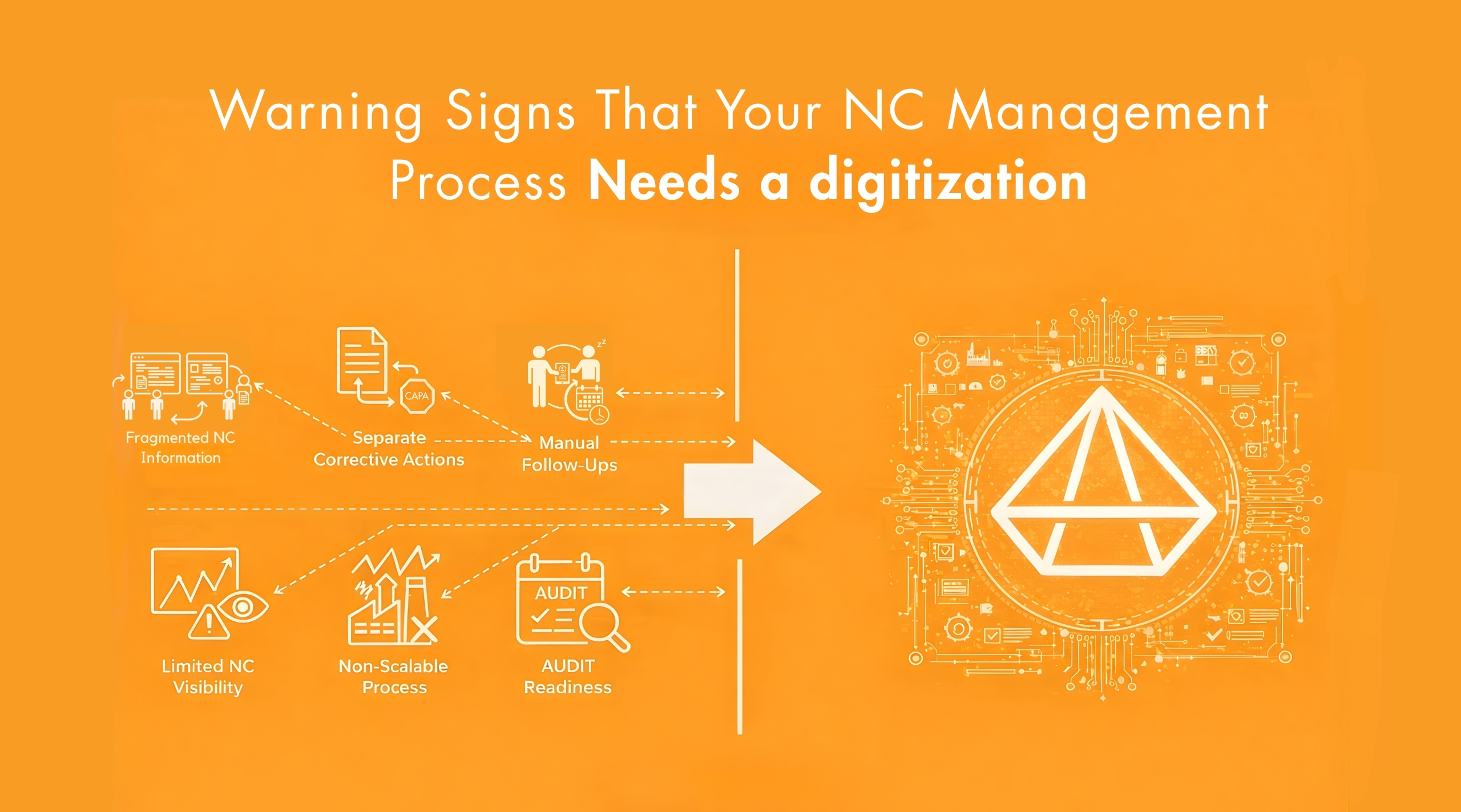
- Manual Tracking of Compliance Activities: Internal audits, corrective actions, training updates and management review inputs are often tracked through spreadsheets and emails. As responsibilities increase, accountability becomes informal and inconsistent. Follow-ups rely on manual reminders, increasing the risk of delays and omissions. When compliance success depends on individual vigilance rather than structured workflows, manual ISO compliance issues begin to undermine consistency within the quality management system.
- Event-Driven Audit Readiness: Organisations operating with manual systems often prepare for audits only after dates are confirmed. Evidence is compiled retrospectively, records are re-validated and teams work under pressure. This reactive pattern signals that compliance is not embedded into routine operations of the quality management system. ISO compliance digitization enables continuous audit readiness by maintaining records and approvals as part of daily processes.
- Disconnected Audit Findings and CAPA: Corrective and preventive actions (CAPA) are essential to improvement under ISO standards. In manual systems, audit findings and corrective actions are frequently tracked separately, breaking traceability. Ownership, timelines and effectiveness verification become inconsistent across departments. Without a structured link between findings and actions, improvement remains local instead of systemic an issue commonly resolved through qms system software or eqms software.
- Limited Real-Time Compliance Visibility: Leadership oversight depends on timely, accurate information. In manual compliance environments, management relies on compiled summaries that are often delayed and incomplete. Without consolidated visibility, trends, recurring non-conformities and systemic risks remain hidden. ISO compliance digitization provides real-time insight across audits, documents and actions supporting proactive governance rather than reactive intervention.
- Compliance Effort Outpacing Growth: As organizations expand operations, add locations, or implement additional ISO standards, manual compliance effort increases disproportionately. More spreadsheets, more coordination and longer reporting cycles become the norm. This imbalance signals that existing compliance methods are no longer sustainable. Digitization often through qms system software or eqms software allows compliance processes to scale without increasing administrative load.
- Person-Dependent Compliance Knowledge: When compliance knowledge resides with individuals rather than systems, continuity becomes fragile. Staff changes, role transitions, or absences disrupt documentation history, audit context and decision traceability. ISO compliance digitization preserves institutional knowledge within the system, ensuring continuity, audit confidence and long-term stability within the quality management system.
How ISO Compliance Digitization Addresses These Challenges
ISO compliance digitization provides a structured way to resolve the operational and governance gaps highlighted by the indicators above. Instead of treating compliance as a set of disconnected tasks, digitisation establishes a controlled, system-driven framework that supports documentation, audits, corrective actions and management oversight in a unified manner. This approach strengthens the quality management system by embedding control into daily operations.
Digitised ISO compliance enables organisations to achieve the following
- Centralised Documentation Control: ISO compliance digitization centralises all policies, procedures, records and formats within a single controlled environment. Document versions, approvals and revision history are managed systematically rather than manually. This ensures teams always work with the latest approved documents and eliminates the risk of obsolete or unauthorised files being used. During audits, evidence can be retrieved instantly without repeated validation or reconciliation efforts.
- Structured Compliance Workflows: Digitisation replaces email- and spreadsheet-driven follow-ups with defined workflows. Responsibilities, due dates, approvals and escalations are embedded into the system rather than dependent on individuals. This reduces delays, improves accountability and ensures compliance activities move forward consistently across teams. Manual ISO compliance issues caused by missed follow-ups or informal tracking are significantly reduced.
- Continuous Audit Readiness: With ISO compliance digitization audit readiness is maintained continuously rather than triggered by audit schedules. Records, approvals and evidence are updated as part of routine operations, creating a living audit trail. This eliminates last-minute preparation, reduces audit-related disruption and ensures consistent readiness across internal and external audits. Compliance becomes part of normal operations rather than an event-driven effort.
- Integrated Findings and CAPA Management: Digitised systems directly link audit findings with corrective and preventive actions. Ownership, timelines, closure status and effectiveness verification are tracked within the same framework. This integration improves traceability, prevents recurrence of similar non-conformities and supports organisation-wide learning. Such integration is a core strength of structured qms system software and eqms software environments. Structured qms system software enables this linkage by maintaining traceability between findings, actions, and verification.
- Real-Time Compliance Visibility: ISO compliance digitization provides management with real-time visibility into compliance status across audits, documentation and corrective actions. Instead of relying on delayed summaries, leadership can view trends, risks and overdue items as they emerge. This supports proactive governance, informed decision-making and timely intervention when needed, strengthening overall quality management system oversight. This level of oversight is commonly supported through eqms software environments.
- Scalable Compliance Framework: As organisations add locations, functions, or ISO standards, digitised compliance systems scale without increasing administrative burden. Coordination effort does not grow disproportionately with size and reporting remains consistent across the organisation. This ensures compliance structure strengthens alongside business growth rather than becoming a bottleneck.
- Preservation of Compliance Knowledge: Digitisation ensures that compliance knowledge is retained within the system rather than with individuals. Historical records, decisions, audit context and corrective actions remain accessible even when roles change. This protects continuity, reduces dependency on specific personnel and supports long-term stability within the quality management system.
The indicators outlined above do not point to isolated operational gaps. Together, they reveal a structural limitation in how ISO compliance is being managed. When documentation, audits, corrective actions and oversight rely on manual coordination, compliance depends on effort rather than control.
ISO compliance digitization addresses this limitation by embedding governance directly into day-to-day compliance activities. Instead of managing compliance through disconnected tools and follow-ups, organisations operate within a structured framework where rules, responsibilities and traceability are enforced by design.
Digitised compliance environments ensure that documentation remains controlled, audit evidence is continuously maintained, corrective actions stay linked to findings and management visibility is always current. This shifts compliance from an event-driven activity to an ongoing operational discipline aligned with quality management system requirements.
As organisational complexity increases across locations, teams and ISO standards, digitization provides the stability needed to scale compliance without increasing administrative burden. Control strengthens with growth, audit readiness becomes continuous and governance moves from reactive intervention to structured oversight.
ISO compliance digitization transforms compliance from a manual coordination challenge into a reliable management system capability one that supports consistency, confidence and long-term operational resilience.
How Pyraman Supports ISO Compliance Digitization
As organisations move from manual coordination to structured ISO compliance digitization, control must be enforced through system behaviour rather than individual effort. Effective compliance depends on consistent execution, not on people remembering processes.
Pyraman supports ISO compliance digitization by embedding compliance rules directly into structured workflows. Documentation, approvals, access, revisions, and withdrawals are managed within a controlled environment where traceability and accountability are maintained by design.
Approvals cannot be bypassed, obsolete documents cannot re-enter circulation, and access is governed by defined responsibility rather than convenience. This reflects how ISO compliance is evaluated during audits, where effectiveness is demonstrated through reliable controls and system traceability.
By reducing reliance on manual oversight, Pyraman helps organisations maintain document integrity, approval traceability, and audit confidence as compliance complexity increases.
Frequently Asked Questions:
- What is ISO compliance digitization?
ISO compliance digitization is the process of managing ISO documentation, audits, corrective actions, and compliance records through structured digital systems instead of manual tools. It ensures that document control, traceability, approvals, and audit evidence are maintained through system behaviour rather than individual effort. Digitization helps organisations enforce consistency, accountability, and governance across compliance activities. It supports long-term ISO compliance rather than one-time certification readiness.
- Why do manual ISO compliance processes fail as organizations grow?
Manual ISO compliance processes rely heavily on spreadsheets, emails, and personal follow-ups, which do not scale reliably. As documentation volume, audit scope, and cross-functional involvement increase, small inefficiencies compound into systemic issues. This leads to version confusion, delayed corrective actions, and inconsistent audit readiness. Over time, compliance depends more on effort than on controlled structure.
- How does ISO compliance digitization improve audit readiness?
ISO compliance digitization maintains records, approvals, and audit evidence continuously as part of routine operations. Instead of preparing for audits only when dates are confirmed, organisations remain audit-ready at all times. This reduces last-minute data collection, repeated validation, and operational disruption. Auditors gain confidence because evidence reflects ongoing control rather than temporary preparation.
- Is ISO compliance digitization required for ISO certification?
ISO standards do not mandate digitization as a requirement for certification. However, digitization significantly improves the organisation’s ability to maintain compliance consistently after certification. As audit frequency, documentation, and corrective actions increase, digital systems help sustain certification with less risk. Many organisations adopt digitization to strengthen governance and reduce audit-related stress.
- What ISO compliance problems does digitization typically solve?
Digitization addresses common issues such as document version conflicts, disconnected corrective actions, manual follow-ups, and limited management visibility. It also reduces dependency on specific individuals for compliance knowledge. By enforcing controls through workflows, digitization ensures traceability and accountability across the compliance lifecycle. These improvements directly support quality management system effectiveness.
- Can ISO compliance digitization support multiple ISO standards together?
Yes. ISO compliance digitization supports managing overlapping requirements across standards like ISO 9001, ISO 14001, and ISO 45001 within a unified framework. Common elements such as document control, audits, CAPA, and management review are handled centrally. This reduces duplication and improves consistency across standards. It also simplifies compliance as the number of certifications increases.
- When should an organization consider digitizing ISO compliance?
Organisations should consider digitization when manual processes lead to repeated audit stress, document control issues, or increasing coordination effort. Signs include delayed corrective actions, reliance on spreadsheets, and limited visibility into compliance status. Digitization becomes especially relevant as organisations grow in size, locations, or certification scope. Early adoption prevents future compliance breakdowns.


More than a Free Trial.
Register yourselves for a digital experience that makes operational excellence attainable.
