
Signs Your Multi-Site Audit Process Needs Digital Centralization
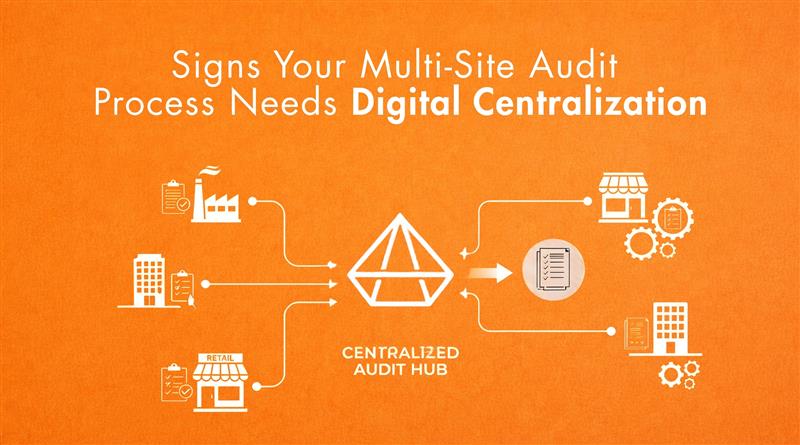
Managing audits across multiple locations introduces complexity that cannot be handled effectively through manual or disconnected systems. As organisations grow, audits expand across sites, teams, and processes. Internal audits, quality audits, customer audits, and compliance checks all depend on accurate records, controlled workflows, and timely visibility across locations.
In many organisations, multi-site audit management still relies on spreadsheets, emails, shared folders, and site-specific practices. While these methods may work at a single location, they create visibility gaps, data silos, and coordination challenges when audits must be managed across multiple locations. These issues rarely appear overnight. They build gradually and become visible only when audits start slowing operations instead of supporting them.
Digital centralization becomes necessary when audit execution, reporting, and follow-up are limited by fragmented data, manual effort and inconsistent processes across sites.
Key Signs Your Audit Process Needs Digital Centralization:
As organisations expand across locations, audit complexity increases in ways that are not always immediately visible. The following signs indicate that existing audit practices are no longer structurally equipped to support scale, consistency, and governance. When multiple indicators appear together, they signal the need for digital centralization rather than incremental fixes.
- Audit Information Is Fragmented Across Locations: In multi-site environments, audit findings, evidence, approvals, and follow-up records are often created and stored locally at individual sites. When this information resides in different tools, folders, or formats, consolidation becomes time-consuming and error-prone. Teams spend significant effort reconciling data instead of analysing audit outcomes. Over time, fragmented information limits traceability and weakens confidence in audit completeness.
- Audit Reporting Cycles Are Increasing: Audit reporting requires coordinated inputs from multiple locations, reviewers, and timelines. As sites grow, inconsistencies in formats and review practices extend reporting cycles. Reports are often finalised well after audits are completed, reducing the relevance of insights for timely decision-making. When reporting becomes retrospective rather than operational, audits lose their value as a management control tool.
- Findings and corrective actions managed separately: When audit findings and corrective actions are managed through separate systems or informal tracking methods, accountability becomes inconsistent. Ownership, due dates, closure status, and effectiveness checks vary across locations. This disconnect allows similar non-conformities to recur and limits organisational learning. Without a unified view, corrective actions remain local responses instead of organisation-wide improvements.
- Audit Readiness Depends on Last-Minute Effort: In the absence of structured systems, audit preparation often begins only after schedules are confirmed. Records and evidence are collected reactively rather than maintained as part of ongoing operations. This results in uneven preparedness across sites and repeated validation of the same information. Over time, audits feel disruptive to daily operations instead of being embedded within routine processes.
- Audit Coordination Relies Heavily on Emails and Spreadsheets: Emails and spreadsheets may support basic coordination but do not scale reliably for multi-site audits. As audit volume increases, version control weakens and follow-ups depend on individual effort. Communication becomes scattered across inboxes and files, making it difficult to identify current or approved information. This reliance introduces delays, gaps, and higher operational risk.
- Management Lacks a Real-Time Audit View: Without centralized audit management, leadership depends on manually compiled summaries to understand audit status across locations. These summaries provide delayed and partial visibility into ongoing activities. Cross-location trends, recurring risks, and systemic issues are difficult to identify. As a result, governance oversight becomes reactive rather than structured and proactive.
- Audit Processes Do Not Scale with Organisational Growth: As organisations add new locations, audit coordination effort often increases faster than audit value. Manual tracking expands, scheduling becomes more complex, and reporting timelines stretch. Instead of gaining control with growth, complexity increases. This imbalance indicates that existing audit methods are no longer sustainable for the organisation’s scale.
How Digital Centralization Helps Resolve These Challenges
Digital centralization provides a structured foundation for managing audits across multiple locations by integrating audit data, workflows, records, and oversight into a single operational framework. Rather than coordinating audits as disconnected, site-level activities, organisations gain consistency, visibility, and control across the entire audit lifecycle while allowing individual locations to operate within a common structure.
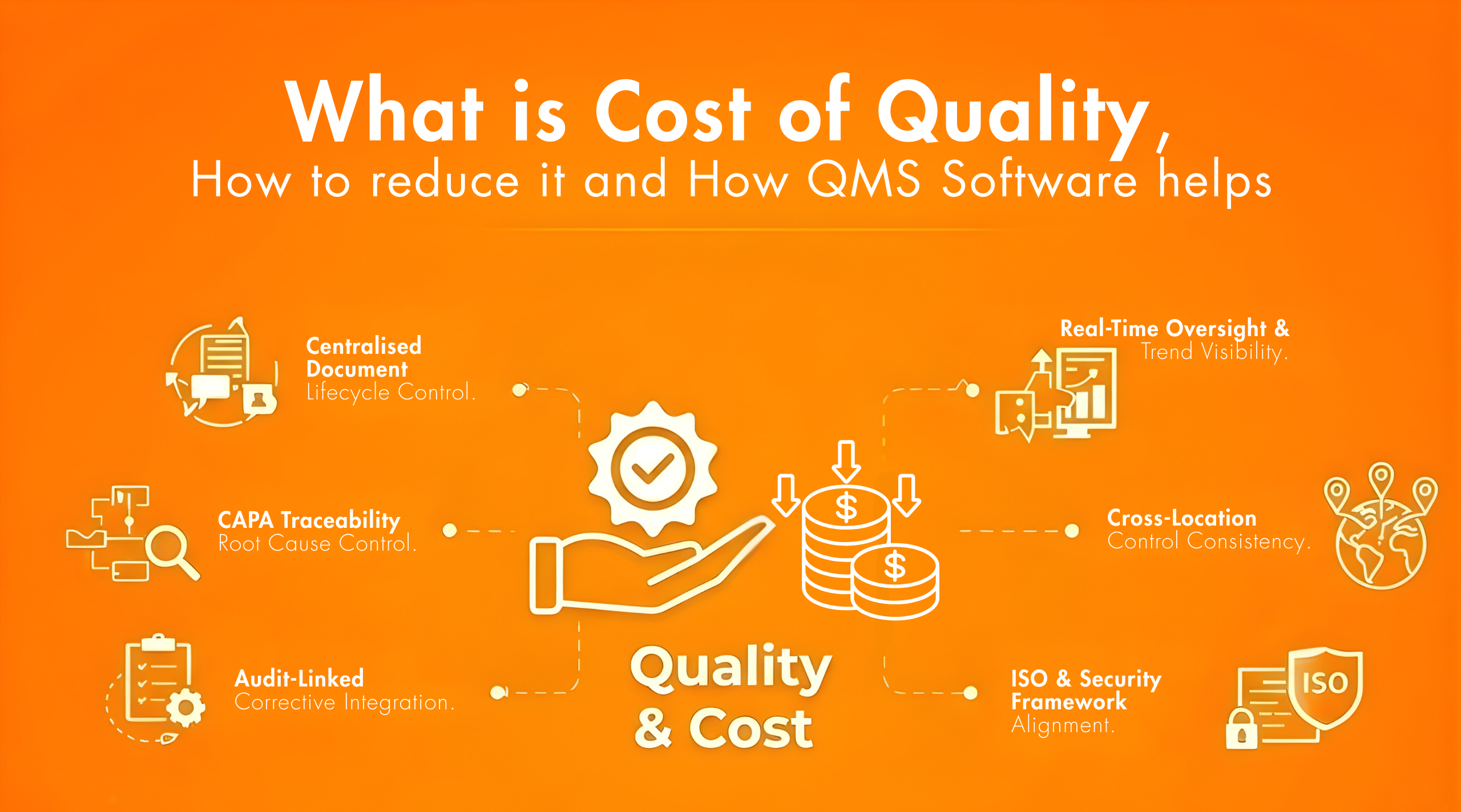
- Centralised Audit Data with Controlled Access: All audit findings, evidence, approvals, and follow-up records are maintained in one structured system rather than dispersed across local tools or folders. This eliminates data fragmentation and reduces dependency on manual consolidation. Controlled access ensures that teams work with current and approved information only. Audit data becomes reliable, traceable, and operationally usable across locations.
- Standardised Audit Execution Across Locations: Digital centralization enables audits to follow consistent structures, templates, and methodologies across all sites. While audit execution remains local, the underlying framework ensures uniformity in how audits are planned, conducted, and documented. This reduces variation in audit quality between locations and strengthens organisational consistency. Audits become comparable rather than isolated exercises.
- Direct Linkage Between Findings and Corrective Actions: A centralized system connects audit findings directly with corrective and preventive actions instead of tracking them separately. Ownership, timelines, closure status, and effectiveness verification are managed within the same framework. This prevents corrective actions from becoming informal or site-specific. Issues are addressed systematically, reducing recurrence and improving organisational learning.
- Continuous Audit Readiness Instead of Reactive Preparation: Digital centralization supports maintaining records, approvals, and evidence as part of ongoing operations. Audit readiness no longer depends on last-minute collection once schedules are confirmed. This reduces pressure on teams, avoids repeated validation of the same information, and creates consistent preparedness across locations. Audits integrate into routine work rather than disrupting it.
- Reduced Dependence on Emails and Spreadsheets: Structured workflows replace manual coordination through emails, spreadsheets, and informal follow-ups. Responsibilities, timelines, and status tracking are embedded within the system rather than dependent on individual reminders. This improves version control and reduces communication gaps. Audit coordination becomes process-driven instead of person-dependent.
- Real-Time Visibility into Audit Progress: Centralized oversight allows audit status to be viewed collectively across all locations. Delays, pending actions, and overdue items are visible as they occur rather than identified through periodic summaries. Management gains timely insight into audit activity, enabling prioritisation and escalation when needed. Oversight becomes proactive instead of reactive.
- Consistent and Reliable Audit Reporting: Audit reports are generated from a common data structure rather than compiled manually from site-level inputs. This ensures consistency in format, content, and interpretation across locations. Reporting timelines improve, and insights remain relevant for decision-making. Verification during internal reviews and external assessments becomes more efficient and reliable.
- Improved Traceability and Documentation Control: Digital centralization maintains clear links between audit records, approvals, evidence, and follow-up actions throughout the audit lifecycle. Traceability is preserved without repeated checks or manual confirmation. This reduces uncertainty during audits and reviews. Documentation control strengthens confidence in audit completeness and integrity.
- Stronger Governance and Risk Oversight: With consolidated audit information, leadership can identify cross-location trends, recurring risks, and systemic issues more effectively. Audits are reviewed holistically rather than in isolation. This supports informed decision-making and structured governance oversight. Risks are addressed at an organisational level rather than remaining localised.
- Audit Processes That Scale with Organisational Growth: As organisations expand to new locations or increase audit scope, centralized audit processes adapt without increasing administrative workload. Coordination effort does not grow disproportionately with scale. Structure and control improve as operations evolve. Growth adds predictability and reliability rather than complexity.
How Pyraman Supports Multi-Site Audit Management:
Pyraman supports digital centralization by bringing audit planning, execution, records, and follow-up activities into a single, structured environment. Instead of managing audits as isolated site-level tasks, organisations gain a consistent way to coordinate audit activity across locations without disrupting local audit practices.
By standardising how audit information is captured and tracked, Pyraman helps reduce fragmentation and manual coordination. As an audit management software platform, Pyraman enables teams to work from a shared audit framework, improving visibility and reliability while allowing each location to operate within the same overall structure.
As audit scope expands, Pyraman provides the stability needed to manage growth with control rather than complexity. This allows organisations to maintain audit consistency, oversight, and confidence as multi-site operations evolve.
Frequently Asked Questions:
- What practical benefits do organisations see after centralising audit processes?
Centralised audit processes reduce the time spent coordinating audits and following up on findings. When supported by audit management software, teams gain clearer visibility into audit progress across locations, and reporting becomes more reliable. Over time, audits shift from being reactive tasks to structured, repeatable processes.
- How do organisations know when manual audit methods are no longer effective?
Manual methods become limiting when audit coordination requires repeated follow-ups, data reconciliation, or last-minute preparation. As locations increase, small inefficiencies compound and create delays or inconsistencies. This usually signals that existing methods no longer scale with operational complexity.
- How does digital centralization support corrective and preventive actions (CAPA)?
A centralized system links audit findings directly with follow-up actions instead of tracking them separately. Ownership, status, and verification remain visible throughout the lifecycle. This reduces delays and helps ensure that corrective actions are completed and reviewed consistently.
- Can audit activities still continue if connectivity is limited at certain locations?
In distributed operations, audits are often conducted in environments with varying connectivity. Digital audit systems are designed to support data capture without constant reliance on real-time access. Information can be synchronised once connectivity is restored, maintaining continuity without disrupting audits.
- What risks do organisations face when audits remain decentralised?
Decentralised audit processes increase the risk of inconsistent records, delayed reporting, and limited oversight. Important information may remain isolated at individual sites, making trend analysis and verification difficult. Over time, this weakens control and increases effort during reviews or assessments.
- How does digital centralization help maintain audit continuity when teams change?
When audit processes rely on individuals rather than systems, continuity is disrupted by role changes or turnover. Digital centralization preserves audit history, decisions, and follow-ups within the system. This allows new team members to pick up audits without loss of context.
- Where does Pyraman fit into digital audit centralization?
Pyraman supports organisations managing audits across multiple locations by providing a structured audit management software environment for planning, execution, records, and follow-ups. It helps teams move from fragmented coordination to consistent, visible audit management as operations scale.

More than a Free Trial.
Register yourselves for a digital experience that makes operational excellence attainable.
