
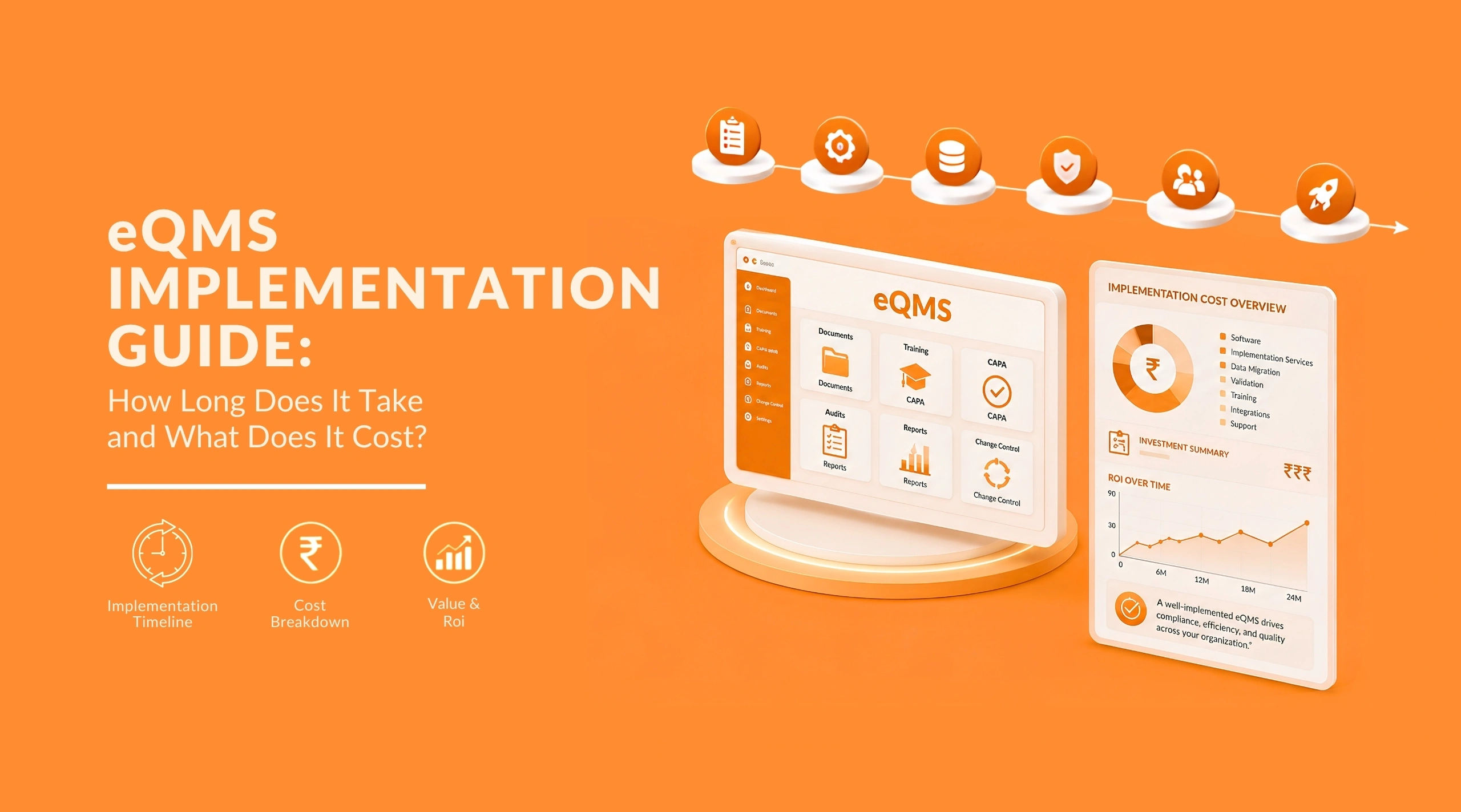
eQMS Implementation Guide: How Long Does It Take and What Does It Cost?
As organizations face increasing regulatory requirements, quality expectations and operational complexities, the adoption of an electronic Quality Management System (eQMS) has become a strategic necessity rather than a competitive advantage. Businesses operating in industries such as manufacturing, pharmaceuticals, medical devices, food and beverage, aerospace and life sciences are rapidly replacing manual quality processes with digital solutions to improve compliance, efficiency and visibility.
However, selecting the right software is only the first step. The real value of an eQMS is realized through a successful implementation process. Organizations often ask important questions before making an investment:
- How long does eQMS implementation take?
- What factors affect the implementation timeline?
- What is the typical eQMS implementation cost?
- How can implementation challenges be minimized?
This comprehensive eQMS implementation guide answers these questions and provides a practical roadmap for organizations planning an eQMS software implementation.
Understanding eQMS Software Implementation
eQMS implementation refers to the process of planning, configuring, deploying, testing and adopting an electronic quality management system within an organization.
Many companies mistakenly assume that purchasing software automatically solves their quality management challenges. In reality, successful implementation involves aligning the software with existing business processes, compliance requirements and organizational goals.
The primary objectives of eQMS software implementation include:
- Standardizing quality management processes
- Enhancing regulatory compliance
- Improving document control and traceability
- Automating workflows and approvals
- Reducing manual errors
- Increasing operational efficiency
An effective implementation ensures that the system becomes an integral part of daily operations rather than just another software application.
Why Proper eQMS Implementation Matters
Organizations that invest time and resources into a structured implementation process are more likely to realize long-term benefits from their quality management software investment.
1. Faster User Adoption
Even the most sophisticated system will fail if employees do not use it effectively.
A well-planned implementation includes user training, stakeholder engagement and change management strategies that encourage adoption across the organization.
2. Reduced Compliance Risks
Improperly configured workflows, incomplete data migration or insufficient validation can create compliance gaps that may lead to audit findings or regulatory concerns.
A structured implementation helps ensure that compliance requirements are addressed from the beginning.
3. Improved Return on Investment
Organizations typically invest significant resources in eQMS software, implementation services, training and ongoing support.
The faster employees adopt the system and quality processes become more efficient, the sooner the organization begins realizing measurable returns on its investment.
4. Long-Term Scalability
Business requirements evolve over time. Organizations may expand operations, introduce new products, enter new markets or face additional regulatory obligations.
A properly implemented electronic quality management system provides a scalable foundation that can support future growth without requiring major process redesigns or system replacements.
Key Factors That Influence eQMS Implementation Timeline
Several factors can impact how quickly an organization can implement an eQMS. From company size and process complexity to regulatory requirements and data migration needs, each element plays a crucial role in determining the overall implementation timeline.
1. Organization Size and Complexity
The size and complexity of an organization play a major role in determining how long eQMS implementation will take. A small organization with a single location, a limited number of users and a few quality processes can often implement quality management software much faster than a large enterprise operating across multiple facilities or regions.
For example:
- Small businesses may only need to configure document control, training management and CAPA workflows.
- Mid-sized organizations often require multiple departments to be involved, increasing configuration and testing requirements.
- Large enterprises may need to standardize quality processes across multiple locations while accommodating different operational needs.
As the number of stakeholders, departments and users increases, implementation planning, approvals, testing and training typically require additional time.
2. Number of Quality Processes Being Digitized
The scope of implementation significantly impacts project timelines.
Organizations that begin with a limited set of quality processes can usually achieve faster deployment compared to those attempting to digitize their entire quality ecosystem at once.
Common modules implemented within an eQMS include:
- Document Control
- CAPA Management
- Change Control
- Audit Management
- Training Management
- Supplier Quality Management
- Risk Management
- Complaint Management
- Non conformance Management
Implementing a single module such as document control software may take only a few days. However, deploying multiple interconnected processes often requires additional workflow configuration, testing and user training.
Many organizations adopt a phased implementation approach, starting with critical quality processes before expanding to additional modules.
3. Data Migration Requirements
Data migration is often one of the most underestimated aspects of eQMS implementation.
Organizations moving from paper-based systems, spreadsheets, shared drives or legacy software platforms must determine which data needs to be transferred into the new system. This process can involve:
- Quality manuals
- Standard operating procedures (SOPs)
- Work instructions
- Training records
- Audit reports
- CAPA records
- Supplier documentation
- Historical quality data
The larger the volume of data, the more time is required for cleansing, organizing, validating and uploading information into the new system.
Poor-quality or inconsistent data can further extend implementation timelines, making preparation and cleanup activities essential before migration begins.
4. Regulatory and Compliance Requirements
Organizations operating in regulated industries often have additional compliance requirements that must be considered during implementation. These requirements may involve enhanced documentation practices, approval workflows, audit trails, electronic record management, electronic signatures and process controls.
To meet these requirements, organizations may need additional system configuration, documentation, user training and validation activities. As compliance expectations become more stringent, implementation projects often require more planning and preparation to ensure the system supports both operational needs and regulatory obligations before go-live.
5. Customization and Workflow Configuration
Modern quality management software offers extensive configuration capabilities that allow organizations to tailor workflows according to their operational requirements.
While customization can improve process alignment, excessive modifications can significantly increase implementation timelines.
Examples of custom configurations include:
- Custom approval workflows
- Department-specific forms
- Automated notifications
- Escalation rules
- Role-based access controls
- Integration-specific workflows
Organizations that leverage standard best-practice workflows often achieve faster implementation compared to those requiring extensive customization.
A balanced approach that prioritizes business needs while avoiding unnecessary complexity can help accelerate deployment.
6. User Training and Change Management
Technology implementation is not only about software it is also about people.
Even the most advanced compliance management software will struggle to deliver results if employees are not adequately trained or resistant to adopting new processes.
Organizations must allocate time for:
- Administrator training
- End-user training
- Department-specific onboarding
- Process documentation
- Internal communication
- Change management initiatives
Successful organizations focus on user adoption early in the project rather than treating training as an afterthought.
When employees understand the benefits of the new system and receive proper guidance, implementation becomes smoother and long-term success is more likely.
7. Internal Resource Availability
The availability of internal resources can significantly impact project timelines.
An eQMS implementation typically requires participation from:
- Quality managers
- Compliance teams
- Process owners
- IT personnel
- Department leaders
- Executive sponsors
If key stakeholders are unavailable or balancing multiple priorities, project milestones may be delayed.
Organizations that assign dedicated project teams and establish clear responsibilities generally complete implementations more efficiently than those relying on part-time participation.
8. Implementation Approach
The chosen implementation strategy can also affect the timeline.
Organizations typically choose between:
Phased Implementation
- Deploying one module or process at a time
- Lower risk
- Easier user adoption
- Longer overall project duration
Full-Scale Implementation
- Deploying multiple modules simultaneously
- Faster overall deployment
- Greater resource requirements
- Higher implementation complexity
The right approach depends on organizational goals, available resources and risk tolerance.
How Much Does eQMS Implementation Cost?
One of the most common questions organizations ask when evaluating an electronic quality management system is, “How much will implementation cost?”
When researching solutions, organizations often focus on the overall QMS software cost and compare pricing across different vendors. However, the final QMS system price is influenced by several factors beyond the software itself, including the number of users, modules being implemented, data migration requirements, training needs and compliance obligations. As a result, implementation costs can vary significantly depending on the scope and complexity of the deployment.
Key Factors That Influence eQMS Implementation Cost
1. Implementation Services
Implementation services cover system configuration, workflow setup, user management, onboarding and technical support. Costs typically depend on the complexity of the organization’s processes and the number of modules being implemented.
2. Data Migration Costs
Migration costs vary based on the volume of documents, existing data quality and whether records are being transferred from paper-based systems or legacy software. Larger and more complex migrations generally require additional effort.
3. Training Costs
Training ensures users can effectively utilize the system. The level of investment depends on the number of users, departments involved and the depth of training required.
4. Compliance Requirements
Organizations in regulated industries may require additional compliance-related activities, such as documentation reviews, audit preparation and regulatory support, which can increase implementation costs.
How Organization Size Impacts Implementation Cost
The size and complexity of an organization also influence the overall implementation investment.
- Small Organizations typically require fewer users, a limited number of quality modules and minimal integrations, resulting in a relatively straightforward implementation process.
- Mid-Sized Organizations often involve multiple departments, additional workflows and greater process complexity, which can increase implementation effort and resource requirements.
- Large Enterprises commonly require multi-site deployment, advanced workflow configurations, extensive user management, enterprise system integrations and broader compliance support, making implementation more comprehensive.
Ready to streamline quality management with Pyraman eQMS?
Book a personalized demo today. attainable.
Typical Pyraman eQMS Implementation Timeline
At Pyraman, eQMS implementation is designed to be straightforward and efficient. Since the platform is already developed and ready to use, the focus is on configuring the system according to your organization’s requirements, migrating quality documents, onboarding users and ensuring a smooth transition to digital quality management.
Phase 1: Organization Setup (Within 1 Day)
The implementation process begins with creating your organization’s dedicated workspace within Pyraman eQMS.
This includes:
- Organization creation
- Administrator account setup
- Department configuration
- Initial user access setup
- Basic system initialization
Once completed, your team can access the platform and begin the onboarding process immediately.
Phase 2: System Configuration and User Setup (Within 1–2 Days)
Pyraman is configured to align with your organization’s quality processes and operational structure.
Activities typically include:
- User creation and management
- Role and permission assignment
- Department mapping
- Approval hierarchy setup
- Workflow configuration
- Notification and alert setup
- Module activation based on business requirements
Whether you’re implementing Document Management System, Record Management System, NC Management System, Audit Management System, Complaint Management System, Training Management System, Objective Management System or MoM Management System, the configuration process ensures Pyraman aligns with your organization’s quality processes while maintaining consistency, traceability and compliance across departments.
Phase 3: Document Upload and Data Migration (within 3 – 4 Days)
The next step involves transferring existing quality documents and records into Pyraman.
This may include:
- SOPs and work instructions
- Quality manuals
- Policies and procedures
- Forms and templates
- Training records
- Audit reports
- CAPA and quality records
During this phase, documents are organized, categorized and uploaded into the appropriate modules to ensure easy access and effective document control from day one.
The timeline depends largely on the volume and quality of existing documentation.
Phase 4: User Training and Process Rollout (Within 2 to 3 days)
To ensure successful adoption, Pyraman provides guidance and training for key users and administrators.
Training activities may include:
- Administrator training
- End-user onboarding sessions
- Module-specific demonstrations
- Workflow walkthroughs
- Document management best practices
Proper training helps users become comfortable with the platform and accelerates adoption across the organization.
Phase 5: Go-Live and Adoption Support (Within 2 to 3 days)
Once users are trained and documents are available within the system, your organization can begin using Pyraman for daily quality operations.
During this phase, the focus shifts to:
- Go-live support
- User assistance
- Issue resolution
- Adoption monitoring
- User feedback collection
- Workflow optimization where required
Our implementation team works closely with customers during the transition period to ensure a smooth rollout and maximize the value of the platform.
What Is the Typical Pyraman eQMS Implementation Timeline?
For most organizations, Pyraman eQMS can be implemented within 1 to 2 weeks, depending on factors such as:
- Number of users
- Number of quality modules being implemented
- Volume of documents being migrated
- Organizational complexity
- Training requirements
Organizations with well-organized documentation and clearly defined quality processes often achieve faster implementation and quicker time-to-value.
Average Pyraman eQMS Implementation Timeline by Organization Size
| Organization Type | Typical Timeline |
|---|---|
| Small Businesses | 2-3 Days |
| Mid-Sized Companies | 3-4 Days |
| Large Enterprises | 1-2 Weeks |
| Multi-Site Organizations | 2-3 Weeks |
These timelines vary based on process complexity, integrations and compliance requirements.
Start Your eQMS Journey with Pyraman
The right eQMS can transform the way your organization manages quality, compliance and operational excellence. With Pyraman’s ready-to-deploy platform, you can reduce manual processes, improve traceability and accelerate quality management initiatives without the complexity of traditional software projects.
Our team will guide you through every stage of implementation from system setup and document migration to user onboarding and go-live support ensuring a smooth transition to a digital quality management environment.
Ready to see what Pyraman can do for your organization?
Request a demo today and discover how quickly you can implement Pyraman and start realizing the benefits of a modern electronic quality management system. View pricing plans and discover the best eQMS solution for your organization.
Frequently Asked Questions
1. What factors affect eQMS implementation cost?
Costs are influenced by licensing, implementation services, data migration, training, compliance requirements and integrations.
2. What is included in eQMS software implementation services?
Services typically include planning, configuration, migration, testing, training, validation and go-live support.
3. Is data migration required during implementation?
In most cases, organizations migrate critical quality records and historical documents into the new system.
4. How can organizations reduce implementation timelines?
Clear requirements, standardized workflows, prepared data and effective training help accelerate implementation.
5. What are the biggest implementation challenges?
Common challenges include resistance to change, poor data quality, lack of stakeholder engagement and integration issues.
6. Can eQMS integrate with ERP and other business systems?
Yes. Most modern eQMS platforms support integration with ERP, CRM, MES and HR systems.
7. How do you measure eQMS implementation success?
Success is typically measured through KPIs such as adoption rates, audit performance, document cycle times and CAPA effectiveness.


Start Your Free 30-Day eQMS Trial
Get full access to Pyraman eQMS for 30 days, free. No commitment, just hands-on document control, audits, and compliance management.
