
7 Business Problems Pharma Manufacturers Solve with EQMS Software
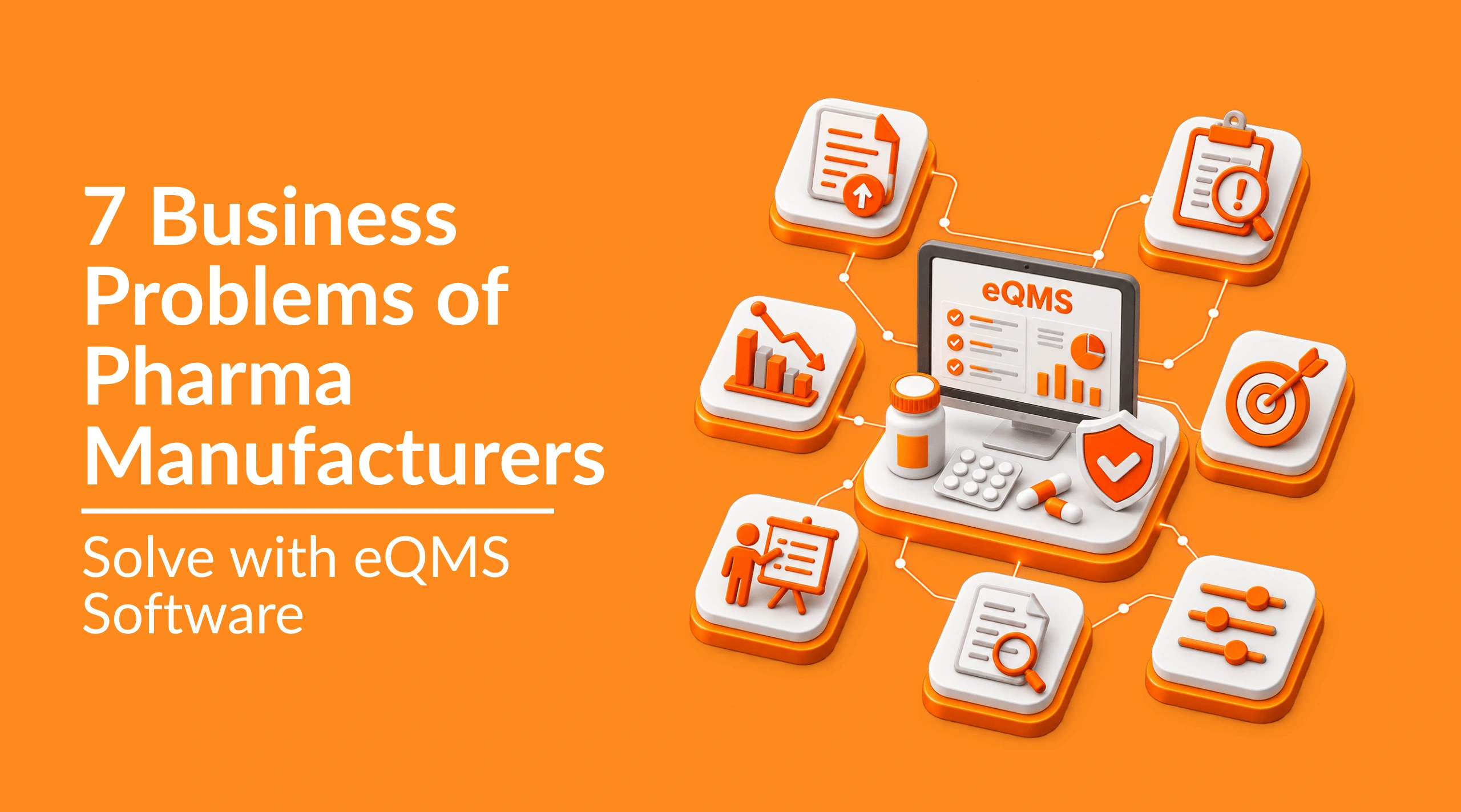
Pharmaceutical manufacturing operates under strict quality and regulatory expectations, where every document, record, process and quality decision can have a direct impact on product safety and compliance. Good Manufacturing Practices (GMP) require pharmaceutical manufacturers to have clearly defined, documented and controlled processes, while the Pharmaceutical Quality System described by ICH Q10 provides a framework for maintaining and continually improving quality.
Yet many organizations still manage critical quality activities through spreadsheets, shared folders, emails and paper-based records. As operations grow, these disconnected methods make it harder to maintain document control, prepare for audits, track quality issues and ensure employees are working with current information.
This is where pharmaceutical eQMS can make a practical difference. An electronic quality management system (eQMS) brings key quality processes into a centralized digital environment, helping teams improve control, traceability and visibility without relying on manual follow-ups.
The Growing Need for eQMS in Pharmaceutical Manufacturing
The purpose of an eQMS is not simply to turn paper forms into digital forms. Its real value comes from connecting quality processes that are often managed separately.
For pharmaceutical manufacturers, this can mean bringing document control, quality records, audits, Non-Conformances, complaints, training and objectives into a more structured digital environment. That connected approach can help organizations improve traceability, reduce manual administration, strengthen audit readiness and maintain greater control over their pharmaceutical quality system.
At the same time, organizations should evaluate eQMS platforms based on their actual quality processes and regulatory requirements. Not every system offers the same functionality or level of pharmaceutical-specific support. For example, some platforms focus heavily on GMP workflows, deviations, CAPA, validation, supplier qualification or electronic batch records. If you’re comparing options, these QMS software features quality managers should evaluate can help you build a practical checklist.
The right solution is therefore the one that matches the organization’s existing quality framework, operational needs and compliance environment.
Here are seven common quality challenges pharmaceutical manufacturers can address with an eQMS.
1. Quality Documents Are Difficult to Control
Pharmaceutical manufacturing depends heavily on controlled documents, including SOPs, work instructions, policies, procedures, forms and quality manuals. When these documents are stored across shared drives, email attachments and physical files, teams can struggle to determine which version is current.
This creates a particularly important issue in a regulated environment: employees need access to the right document at the right time. GMP principles emphasize that procedures affecting pharmaceutical production and testing should be clearly defined, documented, reviewed and controlled.
How eQMS Helps
A centralized pharmaceutical quality management system can bring document control into a structured workflow. Teams can manage revisions, approvals, access and document status from one location rather than relying on manual distribution.
This can help organizations:
- Reduce outdated document usage
- Standardize document approval workflows
- Maintain revision history
- Improve document accessibility
- Strengthen audit traceability
2. Quality Records Are Scattered Across Different Systems
Pharmaceutical quality depends not only on documented procedures but also on evidence that those procedures are being followed. Training records, audit records, inspection records, quality forms, approvals and other records may be maintained by different departments.
When information is scattered, retrieving a complete quality history can become unnecessarily time-consuming.
How eQMS Helps
Pharma eQMS provides a centralized environment for maintaining quality records and making them easier to retrieve when required. Instead of searching through multiple folders or requesting records from different teams, authorized users can access relevant information from a common system.
This improves:
- Record accessibility
- Traceability
- Information consistency
- Audit preparation
- Quality data visibility
3. Audit Preparation Becomes a Last-Minute Exercise
Audits are a regular part of pharmaceutical quality management. Internal audits, customer audits, certification audits and regulatory inspections can require teams to produce documents, records, previous findings, evidence and follow-up actions quickly.
The problem is often not the audit itself. It is the preparation.
When evidence is spread across emails, spreadsheets, shared folders and physical files, quality teams may spend significant time collecting information that should already be organized.
How eQMS Helps
A pharmaceutical audit management system can centralize audit planning, findings, supporting evidence and follow-up activities. This gives quality teams a clearer view of what has been completed, what remains open and where action is required.
The result is a more structured approach to audit readiness rather than a rush to assemble evidence whenever an audit is approaching.
4. Non-Conformances Keep Reappearing
A Non-Conformance is more than an isolated quality event. If similar issues continue to appear, it may indicate that the underlying process has not been adequately addressed.
Manual tracking makes it difficult to see patterns across Non-Conformances, assign responsibility consistently and monitor whether actions are completed on time.
How eQMS Helps
With pharmaceutical Non-Conformance management, organizations can record quality issues, assign actions, monitor progress and maintain a history of previous events in one system.
This creates a more structured process for:
- Recording Non-Conformances
- Assigning responsibility
- Tracking actions
- Monitoring due dates
- Documenting closure
- Reviewing recurring issues
Instead of treating every issue as a separate spreadsheet entry, teams gain a more complete view of quality performance.
Simplify Pharmaceutical Quality Management
Discover how Pyraman eQMS can help you improve quality control & audit readiness.
5. Customer Complaints Are Difficult to Track
For pharmaceutical manufacturers, complaints can provide important information about product and process performance. GMP guidance also recognizes the importance of documented systems for responding to product defects and complaints.
However, complaint information can become fragmented when cases are managed through emails, spreadsheets and individual department records.
How eQMS Helps
Pharmaceutical complaint management system can provide a structured way to record complaints, assign responsibility, track investigations and actions and maintain supporting records.
This helps quality teams create a clearer history for every complaint while reducing the risk of missed follow-ups.
More importantly, centralized complaint data can help organizations identify recurring concerns and use those insights to support continual improvement.
6. Employee Training Records Are Hard to Keep Current
Pharmaceutical quality depends heavily on competent personnel. GMP requirements cover personnel, training, hygiene and the procedures needed to ensure processes are consistently followed
Yet training management is often handled through spreadsheets, attendance sheets, emails and manually maintained certificates. As employee numbers increase, keeping these records, current becomes difficult.
How eQMS Helps
A pharmaceutical training management system can centralize employee training information and provide better visibility into training requirements, completion status and records.
This helps organizations:
- Maintain centralized training records
- Track assigned training
- Monitor completion
- Improve training visibility
- Support audit preparation
Instead of asking individual departments for training evidence, quality teams can access the relevant information through a structured system.
7. Quality Data Is Difficult to Turn into Action
Pharmaceutical manufacturers generate quality data across documents, audits, Non-Conformances, complaints, training and quality objectives. When this information is managed across separate systems, it can be difficult to identify trends, track pending actions and understand where attention is needed.
How eQMS Helps
A connected quality management solution brings key quality information into one place, giving quality teams and management a clearer view of ongoing activities and performance.
Organizations can easily track:
- Open and closed Non-Conformances
- Pending audit actions
- Complaint status and trends
- Training completion
- Quality objective progress
- Document-related activities
With this information available in one place, teams can identify priorities faster, follow up on pending actions and use quality data to support better decisions and continuous improvement.
How Pyraman Supports Pharmaceutical Quality Management
Pyraman brings key quality processes together through a connected platform, including Document Management, Record Management, Audit Management, Non-Conformance Management, Complaint Management, Training Management, Objective Management and MoM Management.
For pharmaceutical organizations, this provides a centralized way to manage essential quality activities, improve information visibility and reduce dependence on disconnected spreadsheets and manual follow-ups.
Ready to Simplify Your Pharmaceutical Quality Management?
See how Pyraman can help your organization connect quality processes, strengthen compliance and improve control through one centralized eQMS platform.
Schedule Your Free Personalized Demo with Pyraman.
Frequently Asked Questions (FAQs)
1. What are the key features of pharmaceutical QMS software?
Key features include document management, record management, audit management, Non-Conformance management, complaint management, training management, objective management, and MoM management.
2. How does eQMS help pharmaceutical companies comply with GMP?
eQMS supports GMP-related activities through controlled document workflows, organized records, training tracking, audit management, and traceability of quality activities.
3. How does eQMS improve audit readiness in the pharmaceutical industry?
eQMS keeps audit documents, records, findings, and follow-up actions organized in one place, making it easier to retrieve evidence and track pending actions before and during audits.
4. Which processes can be managed with pharmaceutical QMS software?
Pharmaceutical QMS software can manage document control, quality records, audits, Non-Conformances, complaints, employee training, quality objectives, and meeting records through connected workflows.
5. How do I choose the right QMS software for a pharmaceutical company?
Choose a QMS that fits your quality processes and supports essential functions such as document and record management, audits, Non-Conformances, complaints, training, and reporting.

Start Your Free 30-Day eQMS Trial
Get full access to Pyraman eQMS for 30 days, free. No commitment, just hands-on document control, audits, and compliance management.
