
What is the Difference Between Quality Management System and Quality Assurance?
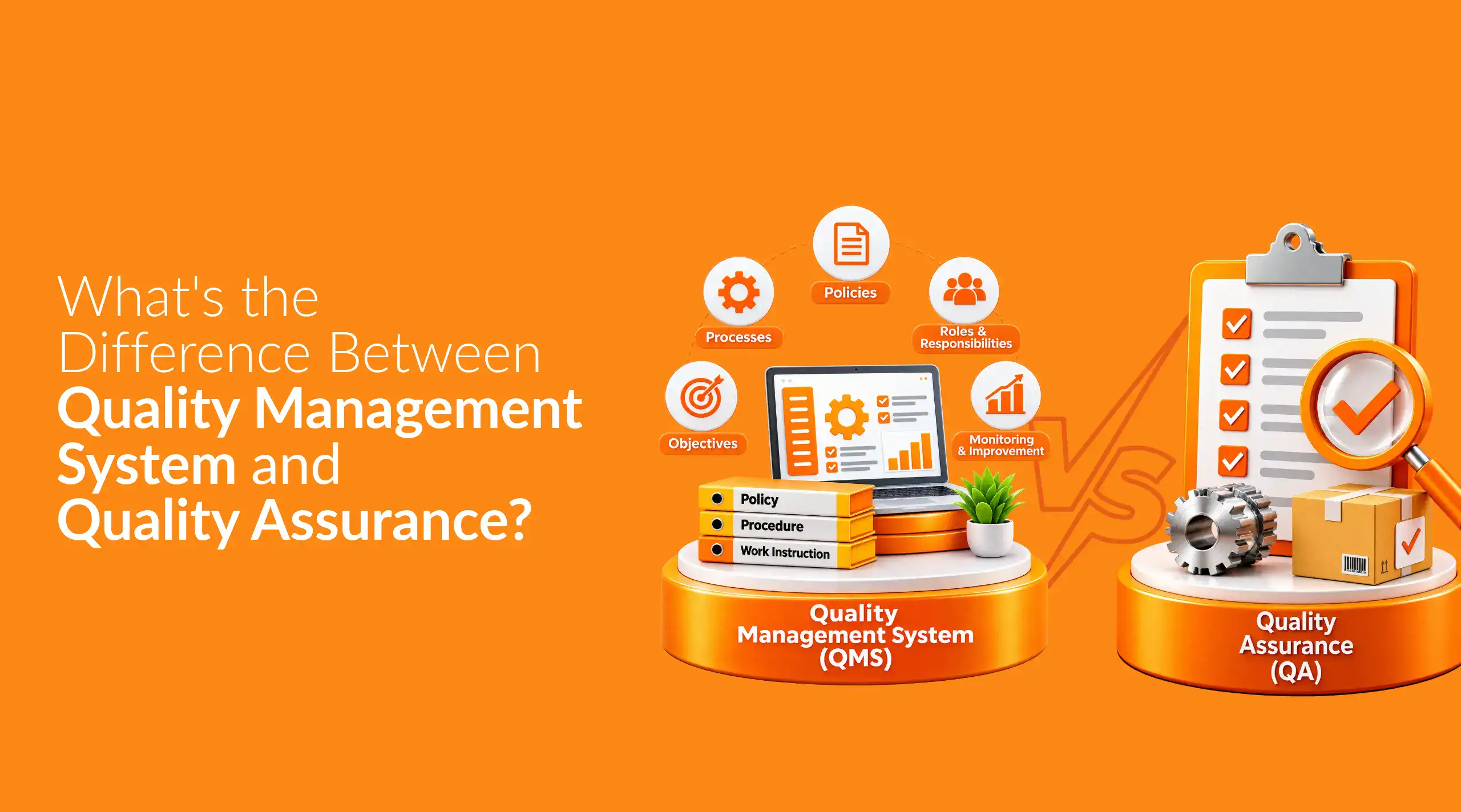
A Quality Management System (QMS) and Quality Assurance (QA) both support consistent quality, but they serve different purposes. A QMS provides the overall framework for managing quality-related processes, while QA focuses on providing confidence that those processes can meet defined requirements.
Consider a manufacturing company that regularly updates its production procedures. It needs a structured way to approve documents, communicate changes, maintain training records, conduct audits and address non-conformances. The QMS establishes how these activities are managed, while QA helps evaluate whether the defined processes are appropriate and followed effectively.
Understanding the distinction helps manufacturers clarify responsibilities, identify process gaps and manage quality more consistently.
What Is a Quality Management System (QMS)?
A Quality Management System is the overall framework an organization uses to establish, manage, monitor and improve its quality-related processes. It brings together the policies, procedures, responsibilities, resources and documented information needed to achieve consistent outcomes.
Rather than treating quality as the responsibility of a single department, a QMS connects quality requirements with everyday business activities. It establishes how processes should operate, who is responsible for them, what records must be maintained and how performance should be evaluated.
For a manufacturing company, a QMS may cover activities ranging from document approval and employee training to internal audits, non-conformance management and continual improvement.
Key elements of a Quality Management System
- Quality policies and objectives: A QMS establishes the organization’s quality commitments and objectives. These provide direction for employees and help management evaluate whether quality-related goals are being achieved.
- Document and record control: Procedures, work instructions, specifications and quality records must be managed appropriately. Document control helps employees access current approved information, while record management provides evidence of completed activities and decisions.
- Defined processes and responsibilities: A QMS clarifies how quality-related activities should be performed and who is responsible for them. Defined responsibilities help reduce confusion when tasks involve multiple departments.
- Audits and non-conformance management: Internal audits help evaluate whether established processes are being followed and whether relevant requirements are being met. Non-conformance management provides a structured way to record issues, investigate them and follow up on appropriate actions.
- Performance evaluation and continual improvement: Organizations need to review process performance, identify recurring problems and evaluate whether improvements are effective. A QMS provides the structure for managing these activities consistently.
Together, these elements create a coordinated approach to quality rather than a collection of separate checks and documents.
What Is Quality Assurance (QA)?
Quality Assurance is the planned and systematic set of activities that provides confidence that quality requirements will be fulfilled. Its primary focus is on processes and the controls used to achieve consistent results, rather than relying only on inspecting finished products.
QA activities help organizations determine whether procedures are appropriate, responsibilities are understood and established processes are being followed. They also help identify gaps that could affect product quality or process consistency.
For example, before a revised production procedure is introduced, QA-related activities may include reviewing the procedure against applicable requirements, verifying that the approval process has been followed and checking whether relevant employees have received the necessary training.
Common quality assurance activities
- Reviewing procedures and work instructions: QA activities can include checking whether documented procedures adequately address applicable requirements and whether the defined process is suitable for its intended purpose.
- Conducting process audits: Internal audits help evaluate whether employees are following established procedures and whether the organization’s processes conform to relevant requirements. Audit findings can reveal gaps that require further investigation or action.
- Verifying training and process implementation: When procedures change, relevant employees may need updated training. Checking training records and verifying implementation help the organization establish whether the change has been communicated and adopted appropriately.
- Monitoring compliance with defined processes: QA activities help determine whether established methods and controls are being applied consistently. Where gaps are identified, the organization can investigate their causes and determine appropriate follow-up actions.
- Supporting preventive improvement: By examining process weaknesses, audit findings and recurring issues, QA can help organizations identify opportunities to address problems before they lead to more significant quality failures.
The exact scope of QA varies by industry and organization. However, the central purpose remains consistent: to provide confidence that the processes used to achieve quality are adequately established and followed.
Quality Management System vs Quality Assurance: Key Differences
The main difference is scope. A QMS provides the broader framework for managing quality across an organization, while QA consists of activities that help provide confidence that quality requirements will be met.
| Comparison point | Quality Management System (QMS) | Quality Assurance (QA) |
|---|---|---|
| Scope | Covers the overall quality management framework. | Focuses on activities that provide confidence in quality. |
| Primary purpose | Establishes and coordinates quality processes. | Helps ensure processes can consistently meet requirements. |
| Main focus | Policies, responsibilities, procedures, records and improvement. | Process adequacy, conformance and verification. |
| Typical activities | Document control, audits, training management, nonconformance management and performance evaluation. | Procedure reviews, process audits, training verification and process checks. |
| Documentation | Establishes how quality information and records are managed. | Generates evidence from QA activities and evaluations. |
| Responsibility | Involves management and relevant functions across the organization. | Often coordinated by quality personnel, with responsibilities shared across teams. |
| Relationship | Provides the broader structure for quality management. | Operates within and supports the organization’s quality management approach. |
QMS and QA work together within an organization’s quality framework. The QMS establishes how quality-related processes are managed, while QA helps evaluate whether those processes are adequate and followed effectively.
How Do QMS and QA Work Together in Manufacturing?
The relationship becomes easier to understand when both concepts are applied to an actual manufacturing situation. Consider a manufacturer that changes a work instruction to address a recurring production defect. The change must be reviewed, approved, communicated and implemented without creating confusion on the production floor.
Step 1: The Quality Management System establishes the process
The organization’s QMS defines how work instructions are reviewed, approved, revised and distributed. It also establishes who can authorize changes and what records must be maintained. This gives the organization a consistent method for controlling production documentation.
Step 2: The revised procedure is reviewed
Before implementation, the revised instruction is evaluated against the relevant requirements. QA-related activities may help verify that the procedure adequately addresses the identified issue and follows the established approval process.
Step 3: The change is communicated to employees
Relevant production personnel may require training or communication before using the revised instruction. The organization’s training process helps determine who needs the update and provides records of completion where required.
Step 4: Implementation is evaluated
Process audits, record reviews or other appropriate verification activities can help establish whether the revised instruction is being followed in practice. This step matters because an approved document alone does not demonstrate that the change has been implemented effectively.
Step 5: Any identified gaps are addressed
If an audit identifies that employees are still using an outdated instruction, the organization can record the issue, investigate why the change was not implemented and assign appropriate follow-up actions. This helps close the gap between an approved procedure and its actual use on the production floor.
QMS vs QA vs QC: What Is the Difference?
Quality Control (QC) is another term that is often confused with QA and QMS. Although all three contribute to quality, they address different aspects of the process.
| Aspect | QMS | QA | QC |
|---|---|---|---|
| Role | Overall framework for managing quality. | Provides confidence that processes can meet requirements. | Checks whether outputs meet specified requirements. |
| Primary focus | System-wide quality management. | Process-oriented assurance. | Product or output conformity. |
| Example in manufacturing | Establishing procedures, responsibilities and recordkeeping requirements. | Auditing whether the production process follows approved procedures. | Inspecting a machined component against specified dimensions. |
Consider a manufacturer producing precision-machined components.
The QMS establishes the processes for managing specifications, production documentation, training and non-conformances. QA activities help evaluate whether those processes are appropriately defined and followed. QC activities, such as dimensional inspection, determine whether the manufactured components meet the specified acceptance criteria.
QC results may reveal a defect, while QA activities can help investigate whether the process was adequately controlled. The QMS provides the broader framework for recording the issue, assigning responsibilities and managing improvement. The three are connected, but they are not interchangeable. Effective quality management requires an appropriate combination of system-level processes, process assurance and output verification.
How Does ISO 9001 Relate to QMS and QA?
ISO 9001 specifies requirements for a Quality Management System. Organizations use it as a framework for establishing and maintaining processes that support consistent product or service quality, customer satisfaction and continual improvement.
Within an ISO 9001-based QMS, activities such as internal audits, process monitoring and non-conformance follow-up help organizations evaluate whether their processes meet applicable requirements and identify where improvement is needed.
For manufacturers, this relationship has practical implications.
- Documented information: Procedures and records must be controlled appropriately where required by the organization’s QMS.
- Defined responsibilities: Employees need clarity about their roles in carrying out and maintaining quality processes.
- Internal audits: Organizations evaluate whether their QMS conforms to applicable requirements and is effectively implemented.
- Non-conformity and corrective action: Identified problems need appropriate evaluation, action and follow-up.
- Continual improvement: Process performance and relevant findings help organizations identify opportunities to improve the QMS.
ISO 9001 certification and QA activities should not be confused. ISO 9001 addresses the requirements of the overall QMS; QA activities are part of how organizations support and evaluate their quality processes. A separate QA department is not the defining feature of an effective QMS. What matters is that the necessary responsibilities, processes and controls are established and implemented appropriately.
How Can an eQMS Support Quality Management and QA?
An electronic Quality Management System (eQMS) uses software to digitize and support quality-related processes, documentation and workflows. For manufacturers managing frequent document revisions, audit activities, employee training and non-conformance records, it provides a structured way to maintain information and track ongoing activities. This can reduce dependence on scattered files, spreadsheets and manual follow-ups while supporting the organization’s established QMS and QA processes.
1. Document control and revision management
A Document Management System helps teams manage controlled documents and revisions in a structured environment. Employees can access the relevant documented information, while established document control processes help prevent confusion over which version should be used. This supports the QMS framework and provides evidence that document-related activities are managed appropriately.
2. Centralized quality records
A Record Management System helps organizations organize and retrieve quality records. This can support activities that require evidence of completed processes, approvals, reviews or other quality-related work. More accessible records can also make it easier to prepare for audits and verify that required information is available.
3. Audit management
An Audit Management System helps organize audit activities and document findings. It supports the evaluation of whether established processes are being followed and provides a structured way to maintain audit-related information. The effectiveness of an audit still depends on its scope, execution, findings and follow-up.
4. Non-conformance management
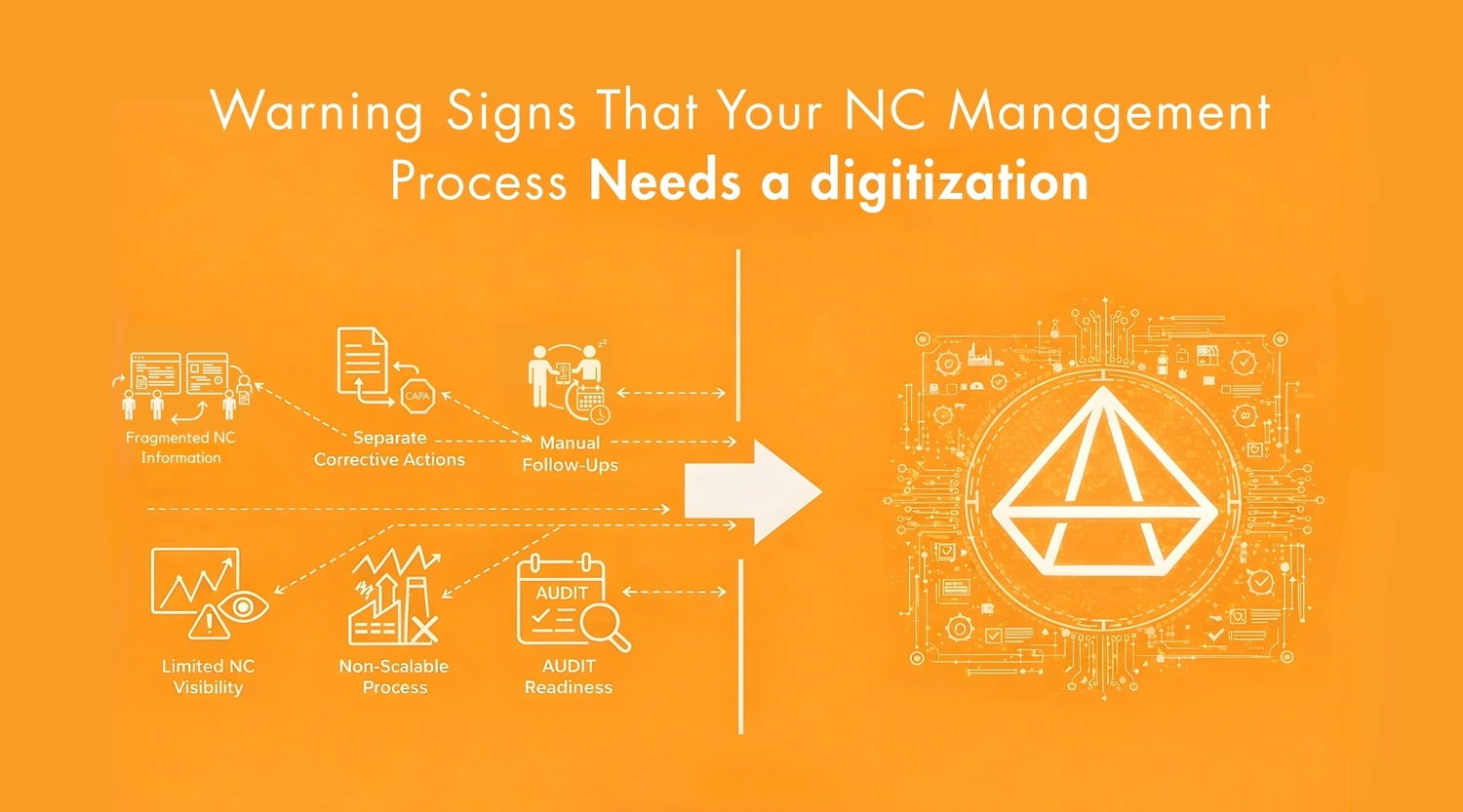
An NC Management System helps teams record non-conformances and manage follow-up activities. Defined workflows can support responsibility, status tracking and documentation of actions taken. This helps organizations maintain visibility over identified issues instead of relying entirely on separate spreadsheets and email reminders.
5. Training management
A Training Management System helps track training activities and related records. When procedures change, training information can support the process of identifying relevant training requirements and monitoring completion. An eQMS does not replace employee judgment, competent auditing or management accountability. Its role is to support the processes and information needed to operate the QMS and carry out QA activities more consistently.
How Pyraman Supports Your Quality Management Processes
Pyraman’s eQMS provides dedicated modules for Document Management, Record Management, Audit Management, NC Management, Complaint Management and Training Management. Together, these modules help organizations manage essential quality activities within a structured digital environment.
For quality teams, this means having a more organized way to manage controlled documents, maintain records, coordinate audits, follow up on non-conformances and complaints, and track employee training. Centralized information and defined workflows can reduce dependence on disconnected spreadsheets and manual follow-ups, making routine quality activities easier to manage and monitor.
An eQMS supports the operation of a QMS; it does not replace the need for appropriate procedures, competent personnel or effective QA activities. Pyraman helps organizations digitize key quality processes so teams can maintain better control over documentation, records and follow-up activities as part of their broader quality management approach.
To explore how Pyraman can support your organization’s quality management processes, visit our Quality Management System page or book a free personalized eQMS demo.
Frequently Asked Questions
1. Can a company have quality assurance without a formal QMS?
Yes. An organization can perform QA activities such as procedure reviews, process audits and internal checks without having a fully developed formal QMS. However, without a coordinated framework, these activities may be less consistent or harder to manage across departments. The appropriate system depends on the organization’s requirements and applicable obligations.
2. Who is responsible for quality assurance in a manufacturing company?
Quality personnel often coordinate QA activities, but responsibility is not limited to one department. Management, production teams, process owners and other relevant employees all contribute by following approved procedures, maintaining records and addressing identified issues.
3. Does ISO 9001 require a separate quality assurance department?
ISO 9001 specifies requirements for a QMS; it does not prescribe one universal organizational structure that every company must follow. An organization can assign quality responsibilities according to its size, operations and needs, provided the applicable requirements are addressed.
4. Can QMS software replace quality assurance activities?
No. QMS software can support document control, records, audit workflows, training tracking and non-conformance follow-up. However, it cannot replace competent personnel, meaningful audits, appropriate process verification or management decisions.
5. What is the difference between a QMS and eQMS software?
A QMS is the overall framework an organization uses to manage quality. An eQMS is software used to digitize and support relevant quality processes, documentation and records. Software can make the framework easier to operate, but simply implementing an eQMS does not automatically establish an effective QMS.

Start Your Free 30-Day eQMS Trial
Get full access to Pyraman eQMS for 30 days, free. No commitment, just hands-on document control, audits, and compliance management.
