
Why ISO-Certified Companies Are Moving to Cloud-Based eQMS
Achieving ISO certification is a milestone. Sustaining it through annual surveillance audits, expanding operations, and a regulatory environment that only grows more demanding is where the real work begins.
Most organizations reach a point where their quality management tools stop keeping pace with their quality obligations. Disconnected documents, manual CAPA tracking, and training records that exist in three different places are manageable at a certain scale. Beyond that scale, they become audit findings waiting to happen.
Cloud-based eQMS platforms are changing how ISO-certified organizations manage this challenge bringing documents, audits, CAPAs, and training into a single, auditable system designed to grow with the business. This blog explores what is driving the shift, what traditional approaches can no longer reliably deliver, and what organizations are gaining by making the move.
What Is a Cloud-Based eQMS?
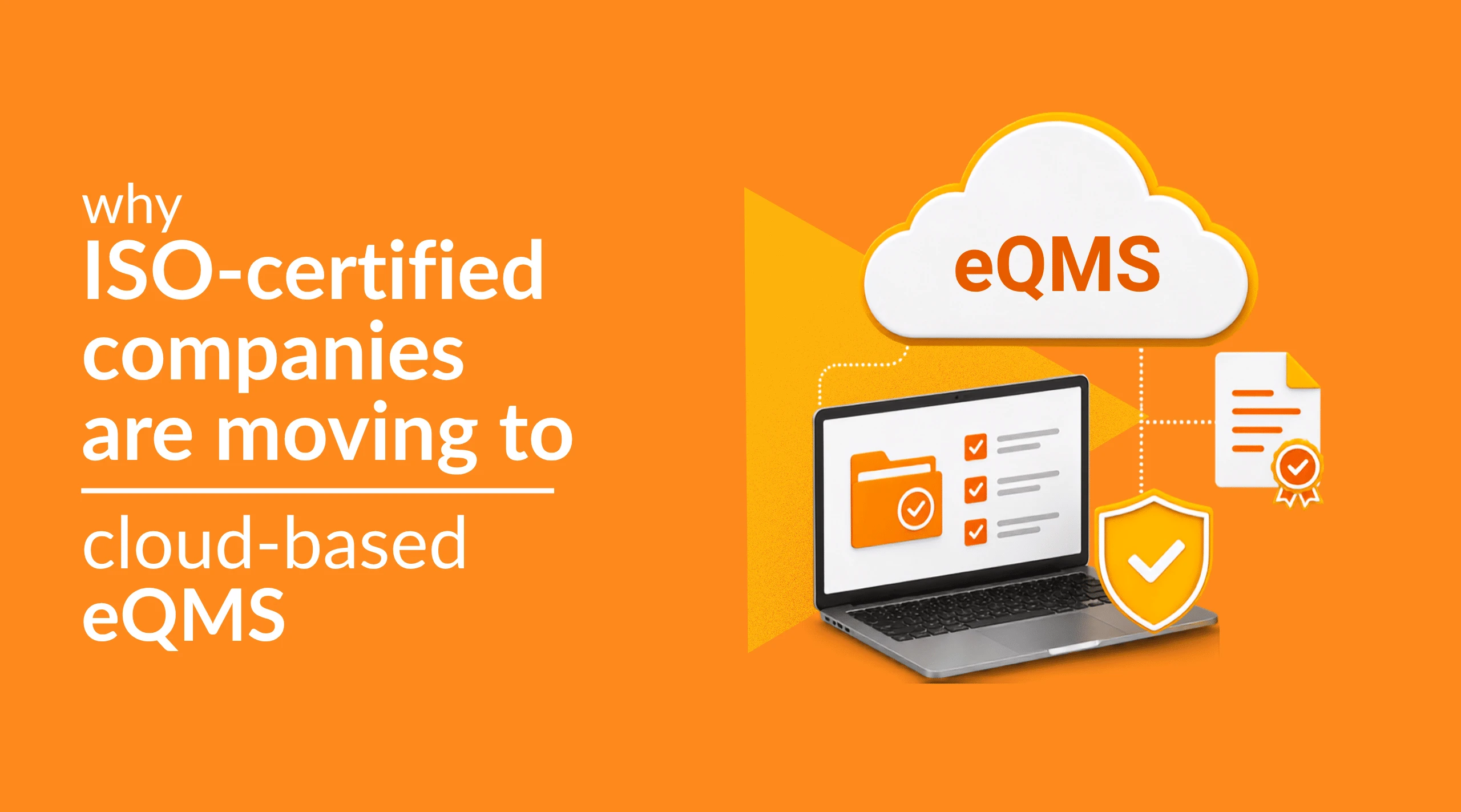
An Electronic Quality Management System (eQMS) is a digital platform that centralizes quality-related processes such as document management, record management, audits, non-conformances, complaints, training and quality objectives. By replacing paper-based systems, spreadsheets and disconnected software, an eQMS helps organizations manage quality more efficiently.
A cloud-based quality management system hosts the software securely in the cloud, allowing authorized users to access quality information anytime, from anywhere.
A cloud-based eQMS typically provides:
- Centralized document and record management
- Version control and approval workflows
- Real-time access to quality information
- Automated notifications and reminders
- Better collaboration across teams and locations
- Faster access to records during audits
For ISO-certified organizations, a cloud-based eQMS improves consistency, enhances visibility and supports continual improvement by replacing manual processes with standardized digital workflows.
Why Traditional Quality Management Systems No Longer Meet Modern ISO Requirements
Achieving ISO certification is only the beginning. Maintaining compliance requires organizations to continuously manage documents, conduct audits, retain records, monitor training and demonstrate ongoing improvement.
Many organizations still rely on paper files, spreadsheets or legacy systems to perform these activities. While these methods may appear manageable initially, they often become inefficient as operations expand and compliance requirements increase.
Here are some of the most common challenges organizations face with traditional quality management systems.
1. Paper-Based Documentation Creates Delays
Managing quality documents manually often results in slow approvals, misplaced files and unnecessary duplication. Employees may spend valuable time searching for the latest procedures, forms or records instead of focusing on quality improvement activities. Without a centralized repository, ensuring that every department uses the most recent approved version becomes increasingly difficult.
2. Version Control Becomes Difficult
One of the biggest risks in manual quality management is employees working with outdated documents. When procedures are shared through email, local folders or printed copies, multiple versions can exist simultaneously. This increases the likelihood of process inconsistencies, non-conformities and audit observations. Maintaining proper version control manually also requires significant administrative effort.
3. Audit Preparation Becomes Time-Consuming
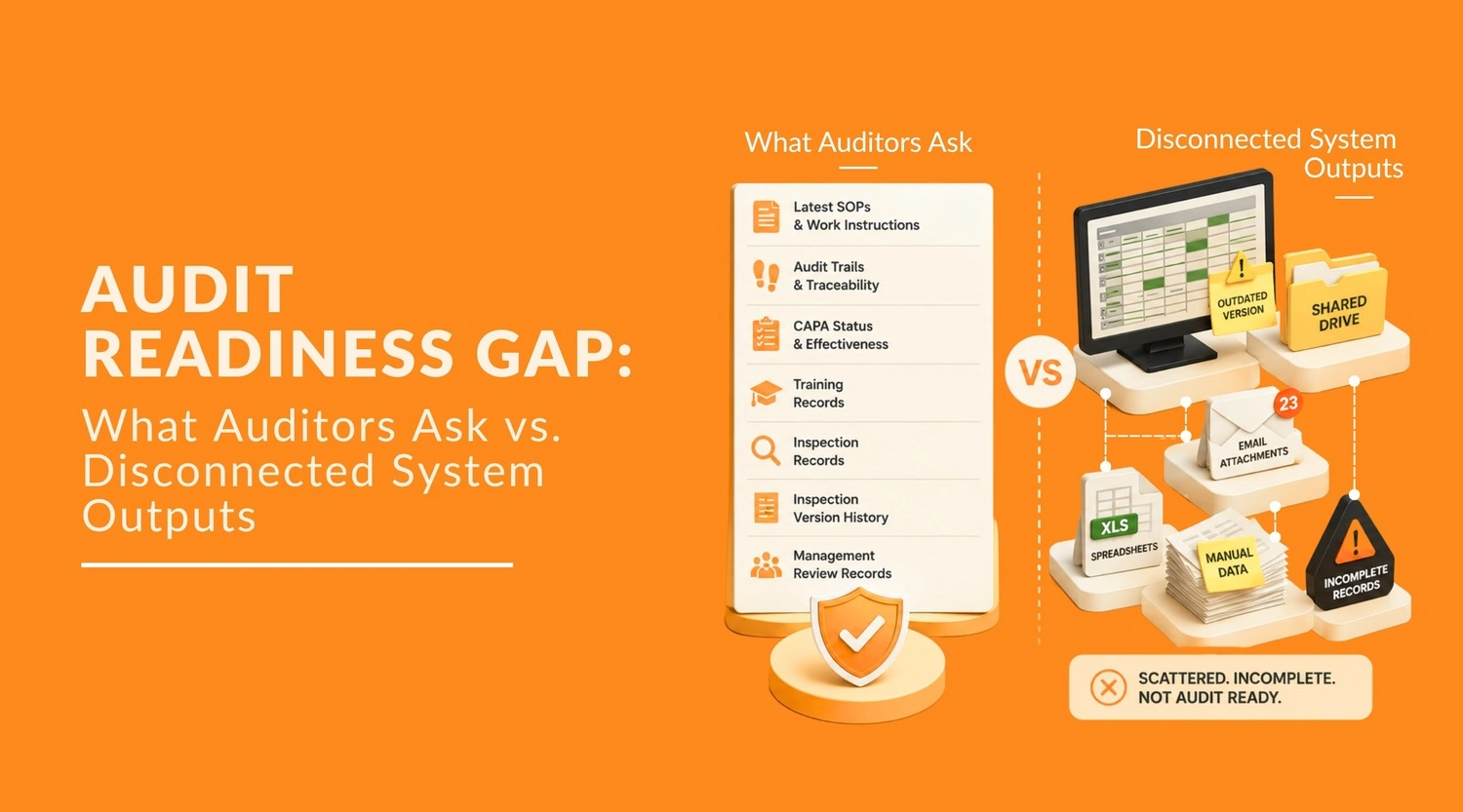
Internal and certification audits require organizations to demonstrate compliance through accurate documentation and objective evidence. When quality records are stored across multiple folders, spreadsheets or filing cabinets, preparing for an audit often involves collecting documents from different departments, verifying revisions and checking record completeness. This not only consumes valuable time but also increases the risk of missing critical information during audits.
4. Limited Visibility Across Departments
Quality management involves multiple functions, including quality teams, production, operations, HR and top management.
When each department maintains separate files or standalone systems, it becomes difficult to gain a complete view of quality performance.
Management may struggle to monitor:
- Audit progress
- Training completion
- Non-conformance status
- Customer complaints
- Quality objectives
Without centralized information, decision-making becomes slower and improvement opportunities can be overlooked.
5. Manual Processes Slow Down Continuous Improvement
ISO standards emphasize continual improvement. However, when approvals, document reviews and quality activities depend heavily on manual follow-ups, organizations often spend more time managing administrative work than driving meaningful improvements. Routine tasks such as reviewing documents, tracking audit findings or monitoring training records can become repetitive and difficult to manage efficiently.
6. Growing Organizations Need Greater Flexibility
As organizations expand to multiple sites or increase their workforce, maintaining consistency through paper-based systems becomes even more challenging. Different teams may follow different practices; records may be stored in separate locations and collaboration between departments becomes less efficient.
A modern cloud-based quality management software helps overcome these limitations by providing a centralized platform where quality information is accessible, standardized and consistently managed across the organization.
Why ISO-Certified Companies Are Choosing Cloud-Based eQMS
Organizations that achieve ISO certification are expected to maintain consistent quality processes, demonstrate compliance and continually improve their management systems. As businesses grow and quality requirements become more complex, traditional methods often struggle to keep pace.
A cloud-based quality management system provides the flexibility, accessibility and control needed to manage quality processes more efficiently. Here are the key reasons why more ISO-certified companies are making the switch.
1. Centralized Document & Record Management
Every ISO management system relies on accurate documentation and well-maintained records. Policies, procedures, work instructions, forms, audit reports and quality records must be controlled, easily accessible and kept up to date.
When these documents are stored across multiple folders, emails or paper files, organizations often face challenges such as:
- Multiple versions of the same document
- Difficulty locating approved documents
- Delayed approvals
- Inconsistent document usage across departments
A cloud-based quality management system centralizes all documents and records within a single platform. With version control, approval workflows and role-based access, employees can quickly access the latest approved information while maintaining complete control over document revisions.
This not only simplifies day-to-day operations but also makes it easier to demonstrate compliance during ISO audits.
Business Benefits
- Improved document accuracy
- Better version control
- Faster document retrieval
- Simplified compliance management
- Reduced administrative effort
2. Simplifies ISO Compliance
Maintaining ISO certification requires organizations to follow documented processes and consistently demonstrate compliance. Manual systems often make this difficult by scattering quality information across multiple files and departments, increasing the time and effort required for audits.
A modern ISO compliance software centralizes documents, records, audits, training and quality objectives on a single platform, helping organizations stay audit-ready, improve consistency and manage multiple ISO standards more efficiently.
Business Benefits
- Easier audit preparation
- Improved compliance consistency
- Better visibility into quality activities
- Reduced paperwork
- Greater confidence during certification audits
3. Faster and More Efficient Audit Management
Audits are essential for verifying ISO compliance, but managing them manually can be time-consuming and difficult to coordinate. A cloud-based quality management software streamlines the entire audit lifecycle by helping organizations plan audits, assign auditors, maintain digital checklists, record findings, generate reports and maintain complete audit histories from a centralized platform. This reduces administrative effort and keeps organizations audit-ready throughout the year.
Business Benefits
- Improved audit readiness
- Faster audit execution
- Better visibility into audit status
- Standardized audit processes
- Reduced manual documentation
A cloud-based eQMS does more than digitize records. It connects documents, audits and quality processes through streamlined workflows that improve efficiency and support ongoing ISO compliance.
4. Improved Collaboration Across Teams and Locations
Quality management involves multiple departments, making collaboration essential. As organizations expand across locations, disconnected systems and manual communication can lead to inconsistent processes, outdated information and approval delays.
A cloud-based quality management system centralizes quality information, enabling authorized users to securely access documents, records and other quality data from anywhere. This helps teams work from the same source of truth, improving collaboration and ensuring consistency across the organization.
Business Benefits
- Improved collaboration between teams
- Consistent quality processes across multiple locations
- Faster document reviews and approvals
- Better communication across departments
- Reduced duplication of work
5. Better Visibility Through Real-Time Dashboards
Making informed quality decisions requires timely and accurate information. However, organizations using spreadsheets or manual reporting often spend considerable time compiling data before they can evaluate quality performance.
A cloud quality management system provides centralized dashboards that bring together key quality information in one place. Instead of reviewing multiple reports from different departments, management can monitor quality performance through real-time insights.
Organizations can track important quality indicators such as:
- Internal audit status
- Non-conformance trends
- Customer complaints
- Employee training completion
- Quality objectives
- Document approval status
Having this information readily available helps organizations identify recurring issues, monitor progress and make informed decisions without waiting for manual reports.
Real-time visibility also supports management review meetings by providing reliable data that can be used to evaluate the effectiveness of the quality management system and identify opportunities for continual improvement.
Business Benefits
- Faster decision-making
- Improved visibility into quality performance
- Better monitoring of quality objectives
- Easier management reviews
- Support for continual improvement initiatives
6. Supports Business Growth Without Increasing Complexity
As organizations grow, managing quality across multiple locations, teams and increasing documentation becomes more challenging. A cloud-based quality management software scales with the business by centralizing documents, standardizing workflows and ensuring consistent quality processes across all locations. This allows organizations to expand without adding unnecessary administrative complexity.
Business Benefits
- Easy scalability as the organization grows
- Standardized quality processes across locations
- Consistent document and record management
- Simplified administration
- Improved operational efficiency
Organizations are no longer adopting cloud-based eQMS simply to replace paper-based systems. They are investing in centralized platforms that improve collaboration, provide real-time visibility and support long-term quality management as their business grows.
More than a Free Trial.
Is Your Quality Management System Holding You Back?
Essential Features to Look for in Cloud-Based Quality Management Software
Choosing the right cloud-based quality management software is about more than digitizing documents. The right solution should simplify quality management, support ISO compliance and help organizations improve operational efficiency through connected, standardized processes.
Whether you’re implementing an eQMS for the first time or replacing a legacy system, here are the essential features to consider.
- Document Management with Version Control – Centralized document repository, version control, approval workflows and role-based access to ensure employees always use the latest approved documents.
- Centralized Record Management – Secure storage and easy retrieval of quality records, helping organizations maintain compliance and improve traceability.
- Integrated Audit Management – Plan audits, assign auditors, record findings, generate reports and maintain complete audit histories from a centralized platform.
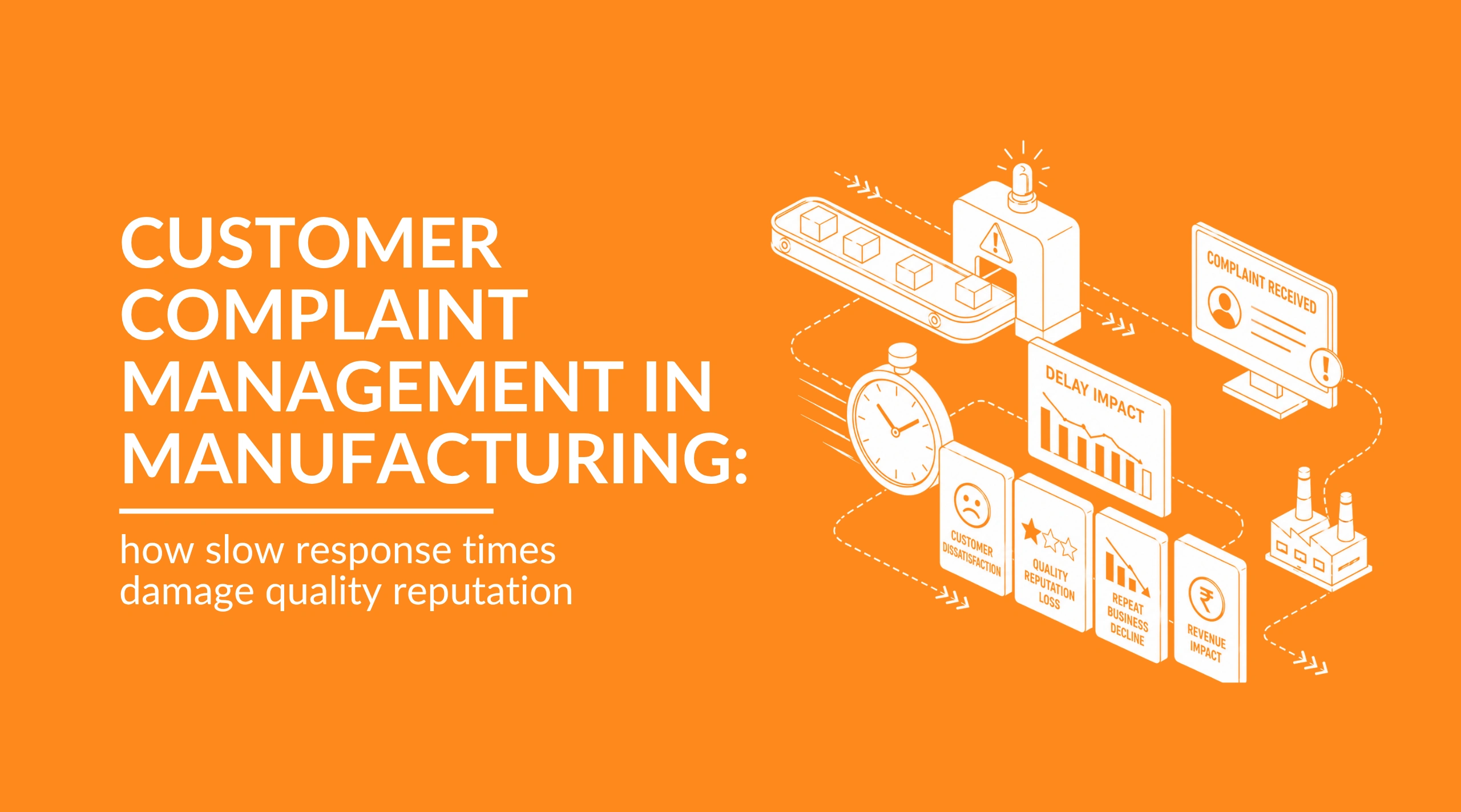
- Non-Conformance (NC), CAPA & Complaint Management – Record non-conformances, manage CAPA within the NC workflow, log customer complaints, assign responsibilities and monitor issue closure through a structured process.
- Employee Training Management – Schedule training, assign courses, maintain competency records, monitor completion and send reminders for upcoming training activities.
- Objective Management – Define quality objectives, assign ownership, monitor progress and evaluate performance through centralized dashboards.
- Real-Time Dashboards & Analytics – Monitor audit performance, document approvals, training completion, complaints, non-conformances and quality objectives through interactive dashboards.
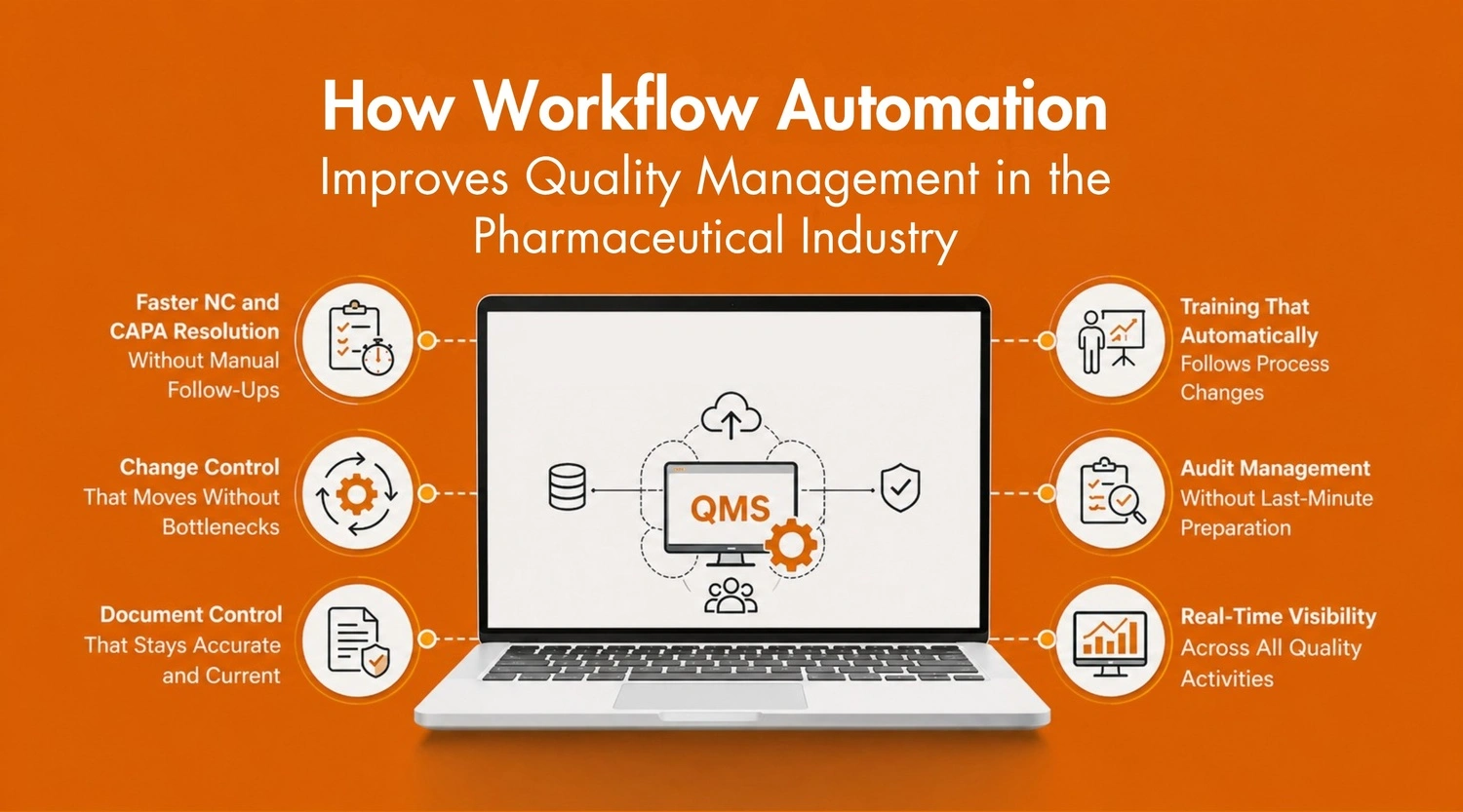
- Workflow Automation – Automate document approvals, notifications, reminders and task assignments to reduce manual effort and improve process consistency.
- Secure Cloud Accessibility – Enable secure cloud access with role-based permissions, controlled document access and protected data storage for teams across multiple locations.
Cloud-Based eQMS vs Traditional Quality Management Systems
Organizations evaluating quality management software often compare cloud-based eQMS with traditional paper-based or on-premise systems. While both support quality management, a cloud-based eQMS offers greater accessibility, automation, collaboration and scalability, making it a more effective choice for maintaining ISO compliance and supporting business growth.
| Cloud-Based eQMS | Traditional Quality Management System |
|---|---|
| Centralized document and record management | Documents and records stored across multiple locations |
| Automatic version control with approval workflows | Manual version tracking and approvals |
| Real-time access from any authorized location | Limited access through local systems or paper files |
| Faster audit preparation with centralized records | Time-consuming document collection and verification |
| Automated notifications, reminders and task tracking | Manual follow-ups through emails or spreadsheets |
| Real-time dashboards for quality performance | Limited visibility and delayed reporting |
| Better collaboration across teams and locations | Communication spread across emails and disconnected files |
| Integrated management of audits, NC, CAPA, complaints and training | Quality processes managed using multiple tools or spreadsheets |
| Easily scalable as the organization grows | Expansion often requires additional infrastructure and administration |
| Improved traceability, accountability and audit readiness | Higher risk of errors, duplicate records and compliance gaps |
For organizations pursuing long-term operational excellence, cloud-based quality management provides greater flexibility, improved collaboration and a more efficient approach to maintaining ISO compliance.
Why Organizations Choose Pyraman
Pyraman is a cloud-based Electronic Quality Management System (eQMS) designed to help organizations digitize and streamline their quality management processes. Instead of relying on multiple spreadsheets, paper documents or disconnected systems, Pyraman provides a centralized platform for managing quality-related activities efficiently.
In addition to these core modules, Pyraman provides features such as:
- Centralized document repository
- Role-based user access
- Version control
- Approval workflows
- Audit trails
- Automated notifications and reminders
- Real-time dashboards and analytics
- Secure cloud accessibility
By bringing quality processes together on a single cloud platform, Pyraman helps organizations improve collaboration, maintain better control over quality information and stay prepared for ISO audits throughout the year.
Whether your organization is transitioning from paper-based quality management or replacing a legacy system, Pyraman provides a practical and scalable solution for managing quality digitally.
Looking for a smarter way to manage quality?
Discover how Pyraman eQMS can help your organization digitize quality processes, simplify ISO compliance and build a more efficient, audit-ready quality management system.
Frequently Asked Questions (FAQs)
1. What is a cloud-based eQMS?
A cloud-based Electronic Quality Management System (eQMS) is a software platform hosted on the cloud that helps organizations manage quality processes such as document management, record management, audits, non-conformances, complaints and training from a centralized location.
2. Why are ISO-certified companies moving to cloud-based eQMS?
ISO-certified companies are adopting cloud-based eQMS to improve document control, simplify audits, enhance collaboration, maintain centralized quality records and gain real-time visibility into quality performance while reducing manual administrative work.
3. How does cloud-based eQMS help with ISO compliance?
A cloud-based eQMS supports ISO compliance by providing controlled document management, secure record storage, audit management, employee training management, approval workflows and audit trails that help organizations maintain compliance more efficiently.
4. What features should I look for in cloud-based quality management software?
Key features include:
- Document Management
- Record Management
- Audit Management
- Non-Conformance Management
- Complaint Management
- Training Management
- Objective Management
- Minutes of Meeting (MoM) Management
- Version Control
- Approval Workflows
- Dashboards & Analytics
- Role-Based Access
5. Can one eQMS support multiple ISO standards?
Yes. A centralized ISO management system software can support common requirements across standards such as ISO 9001, ISO 14001, ISO 45001, ISO 27001 and ISO 22000, including document control, record management, internal audits, employee training and quality objectives.
6. Is cloud-based eQMS suitable for small and medium-sized businesses?
Yes. Cloud-based eQMS solutions are scalable, making them suitable for organizations of all sizes. Small and medium-sized businesses can digitize their quality processes without investing in extensive IT infrastructure while maintaining the flexibility to grow as their operations expand.

Start Your Free 30-Day eQMS Trial
Get full access to Pyraman eQMS for 30 days, free. No commitment, just hands-on document control, audits, and compliance management.
