
eQMS Software for Automotive Industry: Streamlining Quality and Compliance
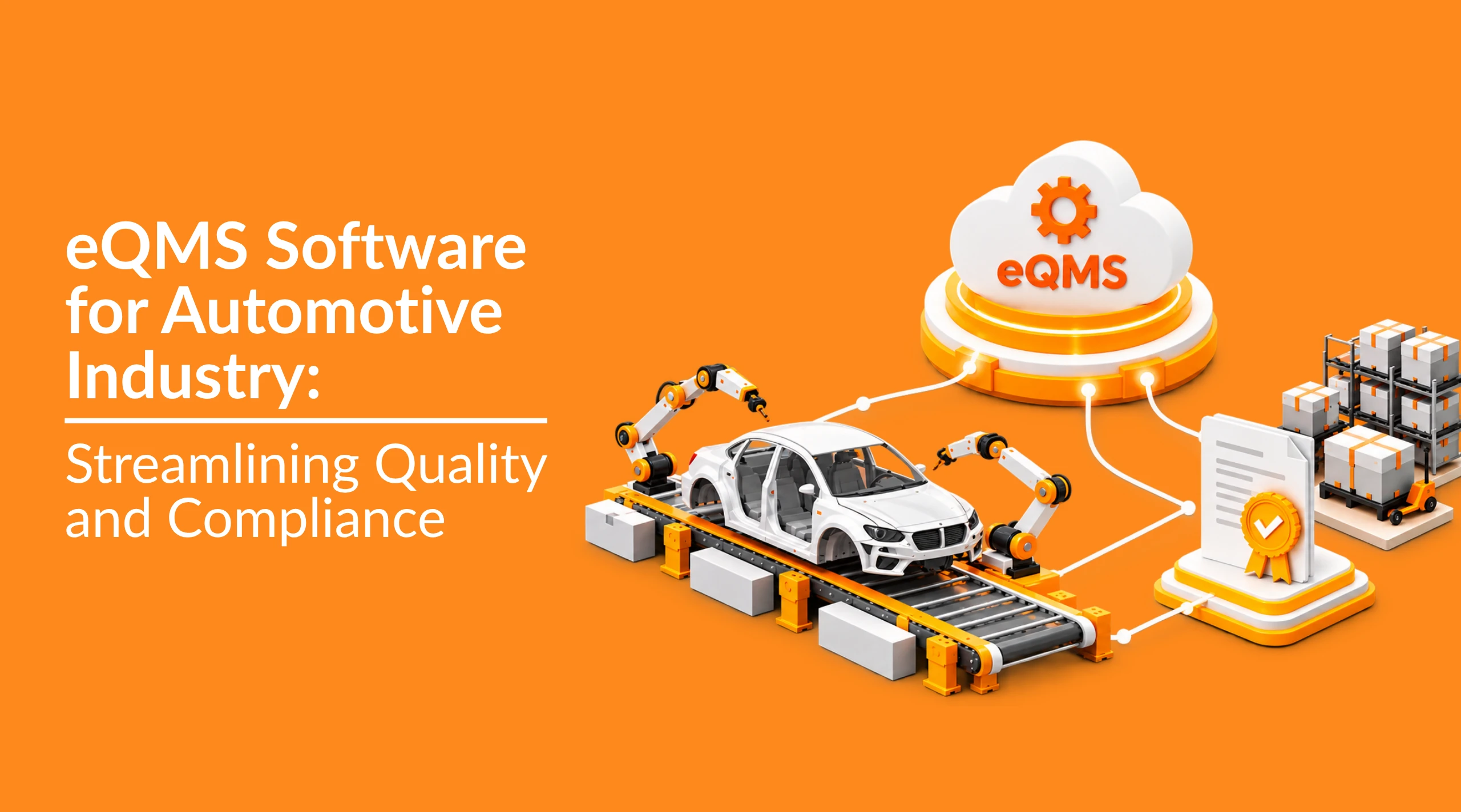
Automotive quality management goes beyond checking whether products meet specifications. OEMs and Tier 1, Tier 2 and Tier 3 suppliers also need controlled processes, documented evidence, consistent execution and the ability to demonstrate how quality activities are managed.
IATF 16949 provides the automotive quality management framework, while OEM Customer-Specific Requirements (CSRs) can add further expectations for suppliers. As quality information grows across documents, records, audits, non-conformances, complaints and training, managing these activities through spreadsheets, shared folders and disconnected systems can make traceability and follow-up more difficult.
This is where eQMS software for automotive industry can help create a more connected approach to quality management. In this guide, we’ll explore the key automotive quality and compliance challenges, how eQMS software can streamline them, what to look for when selecting automotive QMS software and how Pyraman supports automotive organizations.
Why Automotive Quality Management Is More Complex Than a Generic QMS
Automotive organizations operate within a quality environment where process consistency, customer requirements and documented evidence are closely connected. IATF 16949 was developed specifically for the automotive supply chain and maintains a strong customer-oriented approach. In addition, OEMs can have their own Customer-Specific Requirements that suppliers need to consider alongside the applicable quality management requirements.
This means an automotive quality team may need to manage more than a collection of procedures and certificates. It must maintain controlled information, demonstrate that processes are being followed, respond to non-conformances and complaints, prepare for audits and maintain evidence that relevant activities have been completed.
The challenge becomes greater when these activities are managed separately. A revised procedure may sit in one location, training information in another, audit findings in a spreadsheet and quality records somewhere else. The information may exist but connecting it and retrieving the right evidence at the right time can become difficult.
For automotive organizations, therefore, the value of an eQMS is not simply digitizing individual quality activities. It is about making quality information, responsibilities and supporting evidence easier to manage and retrieve when needed.
6 Quality and Compliance Challenges in the Automotive Industry
1. Managing Quality Requirements Across Different Processes
Automotive quality involves multiple functions working toward the same quality objectives. Production, quality, engineering, management and other teams may all interact with procedures, records, audits and quality actions.
When these activities are managed independently, the same quality requirement can be interpreted or followed differently across processes. Teams may also spend time searching for the latest information or manually confirming the status of quality activities.
A structured quality environment can establish defined workflows and responsibilities so that quality requirements are managed more consistently across the organization.
2. Keeping Automotive Quality Documentation Under Control
Automotive operations depend on controlled procedures, work instructions, forms and other quality documentation. The challenge is not simply storing these files; it is ensuring that users can identify the appropriate approved version and that document changes follow a defined process.
This becomes particularly important when procedures or work instructions are revised. If outdated copies remain in local folders or email attachments, employees may unknowingly refer to information that is no longer current.
For example, when a work instruction is revised, the quality team may need to ensure that the current version is available to the relevant users while obsolete copies are no longer being used.
An automotive QMS software solution can help organizations manage document creation, review, approval, revision and access through a structured workflow.
3. Maintaining Traceable Quality Records
A document explains what should happen. A record provides evidence of what happened. For automotive organizations, records can support the demonstration that quality activities were performed as required. During an audit or customer review, the challenge may not be whether a process exists but whether the relevant evidence can be retrieved and traced efficiently.
When records are spread across different folders, spreadsheets or physical files, reconstructing the history of an activity can take unnecessary effort. A structured record management approach helps organizations organize and retrieve quality evidence while maintaining its connection to the relevant process or activity.
4. Managing Non-conformances Before They Become Recurring Problems
A non-conformance needs more than a record stating that something went wrong. The organization needs to establish responsibility, define actions, follow up and document the outcome.
In automotive manufacturing, repeated issues can create additional quality and customer concerns. When non-conformances are tracked separately or through informal follow-ups, it becomes harder to maintain a clear view of open issues and completed actions.
An eQMS can provide a structured workflow for recording non-conformances, assigning responsibility, tracking actions and documenting closure. For example, a recurring production issue can be recorded, assigned to the responsible team and followed through its required actions instead of being managed through separate spreadsheets or email exchanges.
5. Keeping Audit Findings and Follow-Up Actions Visible
Automotive organizations may face internal audits, certification audits and customer-related assessments. Each can generate findings, actions, evidence and follow-up requirements.
The challenge often begins after the audit itself. Findings may be assigned to different people, supporting evidence may be stored separately and overdue actions can require repeated manual follow-up. A structured audit management process helps keep findings, responsibilities and follow-up activities organized so that it becomes part of the ongoing quality process rather than a last-minute preparation exercise.
6. Keeping Employees Aligned With Quality Requirements
Quality processes depend on people understanding the procedures and instructions relevant to their work. When a controlled document or process changes, the employees affected by that change may also need appropriate training. If training information is maintained separately, quality teams may have difficulty determining who has completed the required training or retrieving the relevant evidence when needed.
For example, when a controlled work instruction changes, the relevant employees can be identified and the associated training activity can be tracked alongside the quality process.
Training management within an eQMS can provide a structured way to assign, track and maintain training activities alongside other quality processes.
How eQMS Software Streamlines Automotive Quality and Compliance
The purpose of an eQMS is not to replace an organization’s quality management system. It provides a digital environment for managing the processes, information and evidence that support that system. For automotive organizations, this can make a difference in several areas.
1. Creates One Structured Environment for Quality Information
Documents, records, audits, non-conformances, complaints and training information can otherwise become distributed across different tools and locations.
An eQMS brings relevant quality activities into one environment, making information easier for authorized users to access according to their responsibilities. This can reduce dependence on disconnected spreadsheets, email-based follow-ups and separate document repositories.
2. Standardizes Quality Workflows Without Replacing Process Ownership
Digital quality management does not mean every department must work identically. Instead, organizations can define how important activities move through their required stages. Documents can follow review and approval workflows, non-conformances can be assigned and tracked and audit findings can be followed through to closure. This creates greater consistency in how quality activities are managed, while responsibility remains with the appropriate teams.
3. Connects Related Quality Activities
One of the more useful aspects of a connected eQMS is the ability to manage related quality activities within the same environment.
For example:
Document revision → Training
A revised procedure may require affected employees to complete training.
Audit finding → Non-conformance
An audit observation may require the organization to record and manage a related quality issue.
Customer complaint → Quality action
A complaint can become part of a structured quality follow-up process. These relationships make quality information easier to follow instead of treating every activity as a separate record.
4. Makes Quality Evidence Easier to Trace
Traceability is not simply about storing more information. It is about being able to understand the history of a quality activity when that information is required.
An eQMS can help maintain document revisions, approvals, audit activities, nonconformance records, training activities and related follow-up within defined workflows. For automotive organizations, this can make it easier to retrieve the evidence needed to demonstrate how quality activities were managed.
What Should Automotive Manufacturers Look for in eQMS Software?
Choosing automotive quality management software requires more than checking how many modules a vendor provides. The system should fit the organization’s quality processes and the way automotive teams manage documentation, evidence, audits and quality issues.
1. Support for Automotive Quality Requirements
The platform should be suitable for the organization’s applicable automotive quality framework and support the documented processes needed to maintain it.
IATF 16949 remains the central automotive QMS standard, while applicable OEM Customer-Specific Requirements may add further expectations. These should be considered when evaluating the software and its workflows.
2. Controlled Document Management
Look for capabilities that support:
- Document creation and review
- Approval workflows
- Revision history
- Controlled access
- Retrieval of current information
The goal is to reduce uncertainty around which quality document is approved and applicable.
3. Quality Record Management
The system should make it easier to organize, maintain and retrieve quality records. Ask how records are categorized, accessed, retained and retrieved when evidence is required for an audit or internal review.
4. Non-conformance Management
An automotive QMS software solution should provide a structured way to:
Record → Assign → Track → Close
The workflow should make responsibilities and status clear rather than relying on separate spreadsheets or email follow-ups.
5. Audit Management
Evaluate how the software handles audit activities, findings, assigned actions, supporting information and closure. The important question is not simply whether the platform has an “Audit” module but whether it can support the organization’s actual audit workflow.
6. Training Management
Quality changes can affect employees across different functions. Training management should help organizations assign relevant training, monitor completion and maintain the associated records within a structured environment.
7. Traceability Across Quality Activities
Finally, consider how easily users can follow the history of quality activities.
Can you understand:
- What document was approved?
- What changed?
- Which audit identified an issue?
- Who was assigned the action?
- What training was completed?
- What records support the activity?
These questions help quality teams evaluate whether an eQMS can provide the visibility and evidence needed for day-to-day quality management and audits.
Questions to Ask Before Choosing Automotive QMS Software
Before selecting an eQMS for automotive industry, manufacturers should demonstrate the system using their actual quality scenarios rather than simply reviewing a list of features.
Ask the vendor to demonstrate:
- How a quality document moves through review and approval
- How a revised document is controlled
- How a non-conformance is recorded and followed through to closure
- How an audit finding is assigned and tracked
- How training records are maintained
- How a quality record can be retrieved
- How users can trace the history of a quality activity
For an automotive manufacturer, the demonstration should ideally use a realistic scenario, such as a revised quality document, an audit finding or a customer complaint, so the team can see how the system handles the related quality activities.
eQMS vs Manual Quality Management in Automotive Manufacturing
Many automotive organizations still rely on combinations of spreadsheets, shared folders, emails and physical records for different quality activities. The issue is not that these tools cannot store information. The problem is that they are not necessarily designed to manage a connected quality workflow.
| Manual Quality Management | eQMS Approach |
|---|---|
| Quality information spread across different locations. | Quality information managed within a structured environment. |
| Manual follow-ups for actions. | Defined workflows and responsibilities. |
| Separate document repositories. | Controlled document management. |
| Quality records retrieved from multiple sources. | Structured record management. |
| Audit findings tracked separately. | Audit activities and follow-up managed through defined processes. |
| Training information maintained independently. | Training managed within the quality environment. |
| Quality history reconstructed manually. | Greater traceability across related activities. |
An eQMS does not eliminate the need for people, procedures or quality responsibilities. Instead, it provides a digital structure for managing those elements more consistently.
How Pyraman Supports Automotive Quality Management
Automotive organizations need more than a place to store quality documents. They need a reliable way to manage quality information, responsibilities, records and follow-up activities across day-to-day operations.
Pyraman provides a centralized eQMS environment that brings together Document Management, Record Management, NC Management, Audit Management, Complaint Management, Training Management, Objective Management and MoM Management within one platform.
Consider a common automotive scenario: a controlled work instruction is revised. The change needs to be communicated to the relevant employees and the associated training activity needs to be tracked and recorded. Pyraman helps manage the document and training processes within the same quality environment.
Similarly, when an audit identifies a non-conformance, the finding and subsequent quality actions can be managed through the relevant audit and NC workflows rather than being followed through separate spreadsheets or emails. Customer complaints can also be recorded and managed through a structured complaint workflow.
By bringing these quality activities together, Pyraman helps automotive organizations improve document control, organize quality records, manage audit and NC follow-up, maintain training information and strengthen traceability of quality activities.
For organizations looking to digitize automotive quality processes, the focus is not simply on replacing paper. It is on creating a more connected way to manage quality information and supporting evidence.
Want to streamline your automotive quality processes? Contact us or book your free personalized Pyraman eQMS demo today.
Frequently Asked Questions
1. Is eQMS software required for IATF 16949 certification?
IATF 16949 does not require an organization to use a specific eQMS software platform. An organization can use different methods to establish and maintain its quality management system. An eQMS can, however, provide a structured digital environment for managing documents, records, audits, non-conformances, training and other quality activities.
2. Can an eQMS support automotive suppliers as well as manufacturers?
Yes. The appropriate scope depends on the organization’s processes and quality responsibilities. Automotive suppliers can use an eQMS to structure activities such as document control, quality records, audits, non-conformance management, complaints and training. IATF also publishes requirements and guidance relevant to sub-tier suppliers, so organizations should evaluate the applicable requirements for their specific role in the automotive supply chain.
3. What quality processes should an automotive company digitize first?
Organizations can begin with processes that currently create the most manual work or create difficulty during audits and internal reviews. Common starting points include document management, quality records, non-conformance management and audit management. The right starting point depends on the organization’s existing QMS, process maturity and priorities.
4. Can an eQMS help prepare for IATF 16949 audits?
An eQMS can help organize the documents, records, audit information, non-conformances, training records and other evidence that may be relevant to an organization’s quality management system. However, software does not make an organization compliant by itself. The underlying processes still need to meet applicable IATF 16949 and customer-specific requirements.
5. How does an eQMS help manage automotive quality records?
An eQMS can provide a structured environment for storing, organizing and retrieving quality records. This can reduce the need to search across multiple folders or physical repositories when records are required for audits, reviews or other quality activities.
6. Can automotive companies migrate existing quality documents into an eQMS?
Migration depends on the software, the existing document structure and the organization’s implementation approach. Before migration, organizations should review which documents are current, which are obsolete, what revision history needs to be retained and how documents should be organized within the new system.
7. How should an automotive company evaluate eQMS software?
Start with the organization’s actual quality workflows rather than comparing feature lists alone. Evaluate document control, records, audits, non-conformances, complaints, training, access controls and traceability and ask vendors to demonstrate these processes using realistic automotive scenarios.
8. Can an eQMS support multiple automotive manufacturing locations?
An eQMS can provide a common environment for organizations operating across multiple locations, subject to the platform’s configuration and access structure. Manufacturers should evaluate how the system handles users, locations, responsibilities, documents and workflows as part of the software selection process.

Start Your Free 30-Day eQMS Trial
Get full access to Pyraman eQMS for 30 days, free. No commitment, just hands-on document control, audits, and compliance management.
