
Digital Quality Management for MSMEs: What to Digitise First
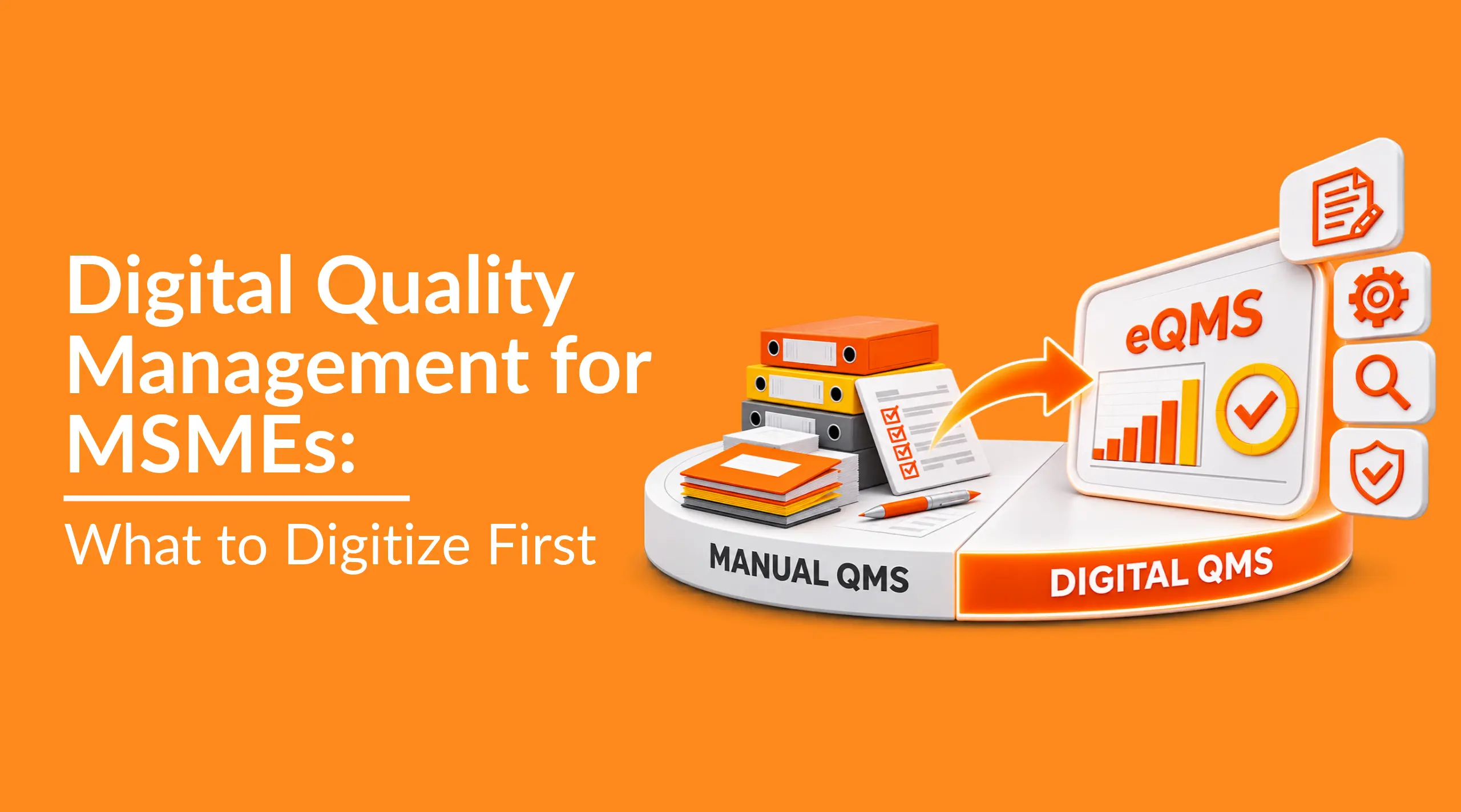
For many Micro, Small and Medium Enterprises (MSMEs), quality management begins with paper records, spreadsheets, shared folders and manual follow-ups. These methods may work when operations are small, but as customer requirements, documentation and audit activities increase, managing everything manually becomes more difficult.
The challenge is not always a lack of quality procedures. It is often the effort required to maintain them consistently. Teams spend time searching for documents, updating records, following up on pending actions and preparing information for audits.
Digital quality management can help MSMEs bring these activities into a more structured environment. However, digitising every quality process at once may not be practical, particularly for businesses with limited resources.
A better approach is to identify the processes that create the most manual effort or operational difficulty and digitise them in a planned sequence. So, where should an MSME begin?
Why Digital Quality Management Matters for MSMEs
MSMEs often operate with smaller teams, where employees handle multiple responsibilities. Quality-related activities may depend on a few individuals who maintain documents, update records, coordinate audits and follow up on non-conformances.
As the business grows, this approach can create several challenges:
- Scattered documentation: Quality procedures, work instructions and records may be stored across physical files, spreadsheets and different folders.
- Difficulty tracking quality issues: Non-conformances and corrective actions can become difficult to monitor when updates depend on manual follow-ups.
- Time-consuming audit preparation: Finding the right documents, records and evidence can take considerable time.
- Inconsistent information: Multiple document copies and manual updates can create confusion about which information is current.
- Limited process visibility: Management may not have a clear view of pending quality activities and unresolved findings.
Digital quality management helps address these challenges by bringing important quality processes into a more organised digital environment. For MSMEs, the objective should be to reduce unnecessary administrative effort, improve control over quality information and make existing processes easier to manage.
What Should MSMEs Digitise First?
The right starting point depends on the organisation’s current quality challenges. However, some processes generally provide a practical foundation for digital quality management.
1. Quality Documents and Procedures
Document control is often a sensible starting point because quality activities depend on employees having access to the correct procedures, policies, work instructions and specifications.
When documents are maintained manually, outdated copies may remain in circulation. Employees may also spend time checking revision details or searching through different folders to locate approved information. Digitising document management helps organisations maintain quality documents in a centralised system, manage revisions and control access to relevant information.
MSMEs should consider starting with:
- Quality manuals and policies.
- Standard Operating Procedures (SOPs).
- Work instructions.
- Inspection procedures and checklists.
- Document revision and approval records.
Establishing better document control gives employees a more organised way to access and maintain the information required for their work.
2. Quality Records
Once document control is addressed, organisations should review how they maintain quality records. Inspection reports, audit records, training evidence, non-conformance reports and other quality-related information are important for demonstrating that processes are being followed.
When these records are stored in physical files or separate spreadsheets, retrieving specific information can become difficult, particularly during audits or internal reviews. A digital Record Management System helps organisations organise, store and retrieve quality records more systematically.
For MSMEs, useful records to Digitise include:
- Inspection and testing records.
- Internal and external audit records.
- Non-conformance reports.
- Employee training records.
- Customer complaint records.
- Quality review and meeting records.
Organised digital records improve accessibility and make it easier for teams to maintain information required for quality reviews and audits.
3. Non-conformance Management
Non-conformances can arise from production activities, inspections, audits, customer complaints or failures to follow established procedures. If these issues are recorded in different spreadsheets or communicated through emails, tracking their investigation and corrective actions can become difficult.
Digitising non-conformance management gives quality teams a structured way to record issues, document investigations and follow up on related corrective actions.
MSMEs should prioritise this process when they frequently experience:
- Repeated product or process defects.
- Delays in investigating identified issues.
- Corrective actions that remain pending.
- Difficulty maintaining non-conformance records.
- Limited visibility into the status of reported issues.
A structured digital process helps teams maintain better control over identified problems and their follow-up activities.
4. Audit Management
Internal audits help organisations evaluate whether established procedures are being followed and identify areas that require attention.
However, managing audit schedules, checklists, findings, supporting records and follow-up activities manually can create additional administrative work. Digitising audit management helps teams maintain audit-related information, document findings and track follow-up activities in a more organised manner.
For MSMEs, this can be particularly useful when preparing for certification audits, customer audits or regular internal assessments. Rather than maintaining audit information across multiple files, teams can manage relevant audit records within a structured system.
5. Customer Complaint Management
Customer complaints provide important information about product quality, service issues and unmet requirements. When complaints are received through emails, phone calls or different communication channels, maintaining a consistent record of each issue can become challenging.
Digitising complaint management helps organisations record customer concerns, maintain investigation details and track their resolution.
MSMEs should consider digitising this process when complaints are increasing, similar concerns are being reported repeatedly or follow-up information is difficult to retrieve. A structured complaint management process also helps quality teams maintain visibility over customer-related quality concerns.
6. Employee Training Records
Employees need to understand the procedures and responsibilities relevant to their work. However, maintaining training attendance, completion records and supporting documentation manually can become difficult as teams expand.
Digitising training management helps organisations maintain employee training records and track relevant training activities.
MSMEs can begin by digitising:
- Employee training attendance records.
- Training completion details.
- Training materials and related documents.
- Records of employee participation.
- Training requirements for relevant roles.
This creates a more organised way to maintain evidence of employee training and support consistent implementation of quality procedures.
How to Decide Which Process to Digitise First
Not every MSME needs to Digitise all quality processes immediately. The starting point should depend on the organisation’s actual requirements rather than the number of features available in a software solution.
Before selecting a process, consider the following factors:
- Current manual workload: Identify which activities consume the most time. If employees regularly spend hours searching for documents, updating spreadsheets or following up on pending actions, those processes may be suitable starting points.
- Frequency of errors and delays: Review where manual processes create repeated mistakes, missing information, delayed investigations or inconsistent records. Processes with recurring problems may need earlier attention.
- Customer and compliance requirements: Consider which quality activities are important for meeting customer expectations, certification requirements and applicable obligations. Processes with greater compliance significance should receive appropriate priority.
- Business impact: Evaluate how much a process affects daily operations. For example, delays in resolving recurring non-conformances may have a more immediate operational impact than difficulties maintaining routine internal meeting records.
- Team readiness: Consider whether employees understand the existing process and can adopt a digital system without unnecessary disruption. Digitising an unclear or inconsistent process without first defining responsibilities can create additional confusion.
These factors help MSMEs choose a starting point based on practical business needs rather than attempting a complete digital transformation at once.
A Practical Roadmap for MSMEs to Start Digitising Quality Management
Once the priority areas are identified, MSMEs can follow a phased approach to make the transition more manageable.
Step 1: Review Existing Quality Processes: List the quality activities currently managed through paper records, spreadsheets and emails. Identify where information is stored, who maintains it and which activities create the most difficulty.
Step 2: Select the First Processes to Digitise: Choose one or two processes that address the most immediate challenges. For example, an organisation struggling with document revisions may begin with Document Management, while one dealing with recurring quality issues may prioritise Non-conformance Management.
Step 3: Standardise Responsibilities and Procedures: Before moving information into a digital system, clarify how each process should work. Define responsibilities, approval requirements and the information that needs to be maintained.
Step 4: Move Relevant Information into the Digital System: Organise existing documents and records before transferring them. Remove unnecessary duplicates, review outdated information and ensure that the information being Digitised is relevant and accurate.
Step 5: Train Employees and Encourage Adoption: Employees should understand how the new system supports their daily responsibilities. Provide appropriate guidance and ensure that relevant teams follow the defined digital processes.
Step 6: Review and Expand Gradually: Evaluate whether the first Digitised processes have reduced manual effort and improved information accessibility. Once employees are comfortable with the system, additional quality processes can be introduced according to business priorities.
This phased approach allows MSMEs to improve their quality management practices without creating unnecessary implementation pressure.
Common Mistakes MSMEs Should Avoid When Digitising Quality Management
Although digital quality management can simplify routine activities, the transition may not deliver the expected results if organisations approach it without proper planning.
Some common mistakes include:
Digitising Everything at Once: Attempting to move every quality process into a digital system immediately can overwhelm smaller teams. Start with priority processes and expand gradually.
Selecting Software Before Understanding Requirements: Choosing a system based only on the number of available features can lead to unnecessary complexity. First identify the processes that need improvement.
Ignoring Existing Process Gaps: Moving an unclear or inconsistent manual process into software does not automatically make it effective. Review procedures and responsibilities before digitising them.
Overlooking Employee Adoption: A digital system is useful only when employees understand how to use it as part of their regular work. Training and clear responsibilities are important for successful adoption.
Treating Digitisation as a One-Time Activity: Digital quality management should evolve with business requirements. Organisations should periodically review their processes and identify areas that need further improvement.
How eQMS Software Supports Digital Quality Management
An Electronic Quality Management System (eQMS) provides a structured digital environment for managing quality-related processes, documents and records.
Instead of maintaining information across disconnected files and manual tracking systems, organisations can use dedicated modules to manage specific quality activities.
Depending on the modules available, an eQMS can support:
- Document Management: Maintain controlled quality documents and manage revisions.
- Record Management: Organise and retrieve quality-related records.
- Non-conformance Management: Record non-conformances and track related corrective actions.
- Audit Management: Maintain audit records, document findings and support follow-up activities.
- Complaint Management: Record customer complaints and maintain information about their investigation and resolution.
- Training Management: Maintain employee training records and track training activities.
For MSMEs, these capabilities can reduce dependence on scattered spreadsheets and manual coordination. However, software should support the organisation’s established quality processes rather than replace the need for clear procedures, employee involvement and management oversight.
How Pyraman Supports MSMEs in Digitising Quality Management
Pyraman is a cloud-based eQMS platform that helps organisations manage essential quality processes through dedicated modules.
MSMEs can use its Document Management and Record Management modules to maintain controlled documentation and organise quality records. Its NC Management module supports the recording and tracking of non-conformances and related corrective actions, while Audit Management helps teams maintain audit-related records and follow up on findings.
Pyraman also provides Complaint Management and Training Management modules to support customer complaint records and employee training activities.
By bringing these quality activities into a centralised digital environment, Pyraman helps organisations reduce dependence on disconnected manual systems and maintain better control over their quality management processes.
Ready to move your quality processes beyond spreadsheets and paper records?
Book a free personalised demo of Pyraman and see how its eQMS modules can support your digital quality management journey.
Frequently Asked Questions
1. What is digital quality management?
Digital quality management refers to using digital systems and software to manage quality-related processes, documents, records, audits and non-conformances. It helps organisations move away from scattered paper-based systems towards more structured and accessible quality management practices.
2. Why should MSMEs Digitise their quality management processes?
MSMEs can benefit from digitisation by reducing manual documentation, improving access to quality information, maintaining organised records and making it easier to track non-conformances and audit activities.
3. Which quality process should an MSME Digitise first?
Document Management and Record Management are practical starting points for organisations struggling with scattered documentation and difficult record retrieval. However, businesses experiencing recurring quality issues may benefit from prioritising Non-conformance Management first. The right starting point depends on the organisation’s most immediate challenges.
4. Is eQMS software suitable for small and medium-sized businesses?
Yes. An eQMS can help MSMEs manage essential quality processes in a structured digital environment. Organisations can begin with the processes they need most and expand their use of the system as their requirements develop.
5. Can MSMEs Digitise quality management gradually?
Yes. MSMEs do not need to Digitise every quality process at once. They can begin with high-priority activities, establish consistent workflows, train employees and introduce additional processes gradually.
6. What is the difference between digital QMS and eQMS?
Digital QMS refers broadly to managing quality processes through digital tools and systems. An eQMS is a software-based platform specifically designed to support quality management activities such as document control, record management, audits and non-conformance tracking.
7. Does digitising quality management eliminate the need for manual quality checks?
No. Digitisation helps manage quality information, documentation and follow-up activities more systematically. Physical inspections, testing, process monitoring and human decision-making remain important wherever they are required by the organisation’s processes and applicable standards.


Start Your Free 30-Day eQMS Trial
Get full access to Pyraman eQMS for 30 days, free. No commitment, just hands-on document control, audits, and compliance management.
